





Cristina Betancor
Googlehace 1 año
Encantada con el resultado y con el trato recibido por la doctora Marina y todo su equipo. Muy profesionales, atentos y cercanos en todo momento.

Medically reviewed by Maria CastanyUpdated on
Price: 90 €

Treatment duration:
45-90 minutes
Results
Natural
With prior consultation
Specialized
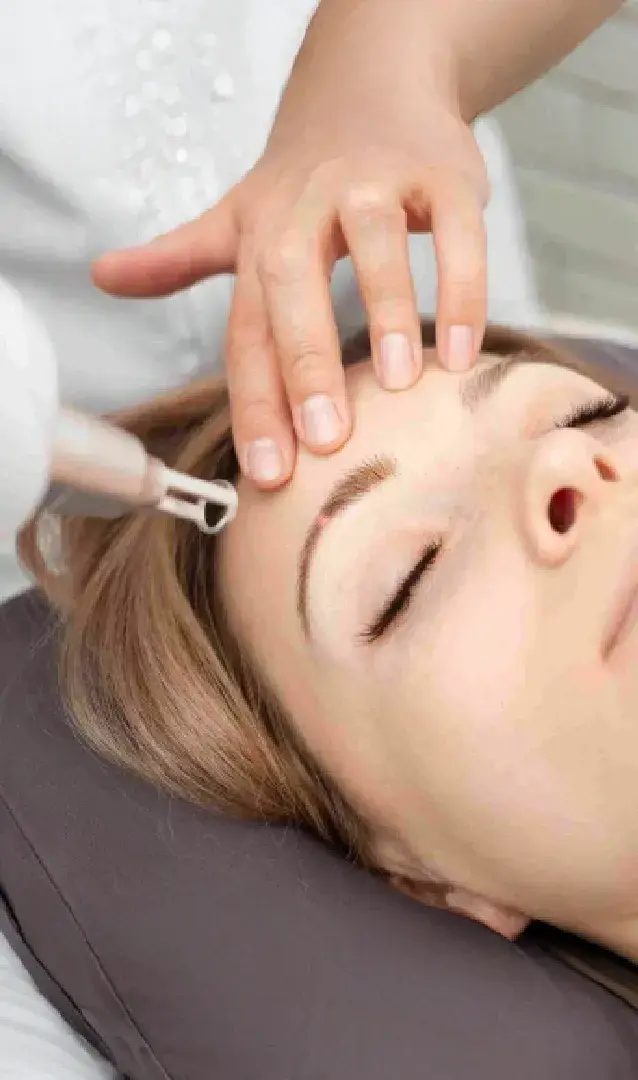
Micropigmentation removal is a treatment to remove poorly done micropigmentation or microblading, color shifts (red, blue, green), pigmentation the patient is not happy with, or the results of malpractice. At Instituto de Benito it is performed using two complementary methods (laser or dermograph), and the choice between them depends on the type of pigment, the area treated and the patient's goal.
Unlike clinics that offer only one of the two techniques, María Castany works with both and chooses the most suitable one for each case after a consultation. This avoids having to send the patient to another center when laser is not the best option, or when laser is the best option and is not being used.
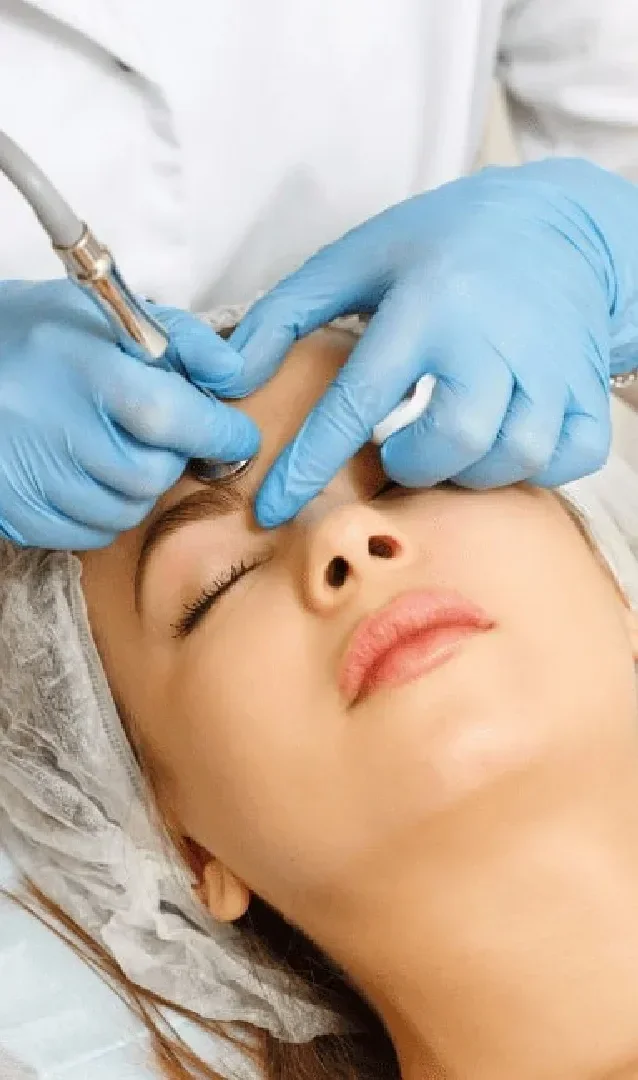
The laser works by selective absorption of wavelengths according to the color of the pigment. It is the fastest option with the lowest cost per session, and it works especially well on well-executed black or dark pigments (the usual ones in eyeliner and many microblading treatments).
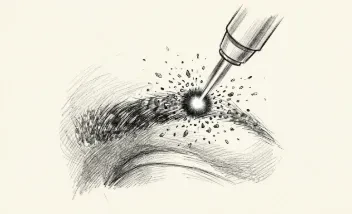
Dermograph removal applies a pigment extraction solution of American origin, legally approved in the European Union, using the same device with which micropigmentation is performed. The solution encapsulates the pigment particles and expels them toward the skin surface, where they form a small scab the color of the pigment that falls off on its own in 7–10 days.

The price of micropigmentation removal at Instituto de Benito depends on the method:
The number of sessions needed depends on the type of pigment, how old the work is and the patient's individual response. Usually between 2 and 6 sessions are needed.
The specialist decides at the initial consultation which method suits each case. If during treatment it becomes clear that a change of method is advisable (for example, finishing with the dermograph what the laser does not fully remove), the plan is adjusted.
The treatment, whether by laser or dermograph, is planned as a protocol of progressive sessions. The number of sessions depends on the type of pigment, the depth of the original work, the time elapsed and the patient's individual response. Usually between 2 and 6 sessions are needed, 6–8 weeks apart.

Before treatment, María Castany assesses the type of previous micropigmentation (microblading, dermograph, semi-permanent, permanent), the color and composition of the pigment (if known), the time since the original work, the condition of the skin and the patient's goals. This is when the choice between laser and dermograph is made. If the micropigmentation is very recent (less than 6 months), you may be advised to wait for it to lose saturation naturally before starting.
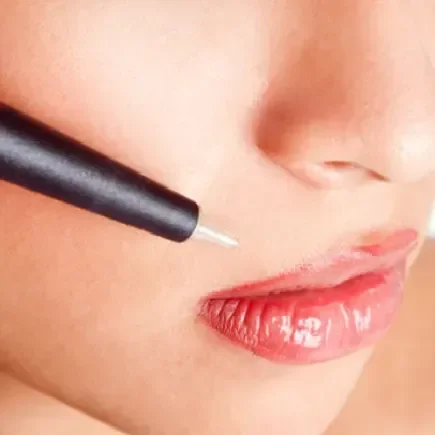
When there are doubts about how the pigment will respond to the chosen method, a test is carried out on a small area before treating the whole piece. This makes it possible to predict the result and the approximate number of sessions.

The area must be clean, with no makeup or creams. Avoid sun exposure in the 14 days beforehand. Do not have other treatments in the area in the 4 weeks beforehand.
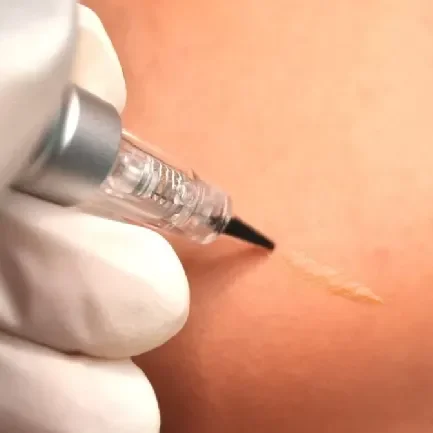
The session lasts between 45 and 90 minutes depending on the size of the area and the method. A topical anesthetic cream is applied. With laser, specific eye protection is used. With the dermograph, sterile single-use needles are used at a calibrated depth.
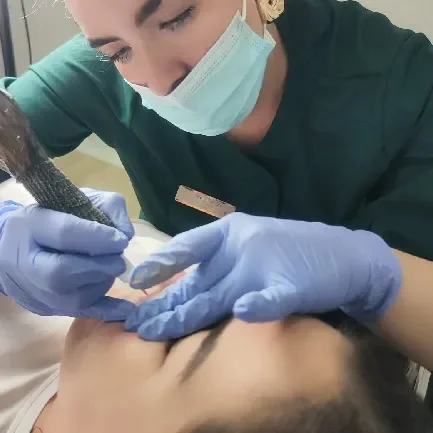
Between sessions, with both methods, the skin forms a small scab the color of the removed pigment that falls off on its own in 7–10 days. Do not scratch it or pick it off. The following sessions are planned according to how the area evolves.

Ideal if you are not happy with the shape, symmetry or saturation of your previous work.
Recommended if the pigment has turned red, blue, green, gray or another unwanted shade.
Indicated when the micropigmentation was applied with too much pigment or too deeply.
If you want to redesign the shape of your brow, lip or eye and the current pigmentation prevents it.
If you have tried laser removal and the pigment has oxidized or has not fully come out: the dermograph recovers what the laser left behind.
If you simply want the area back with no pigment at all.
Remove your old micropigmentation
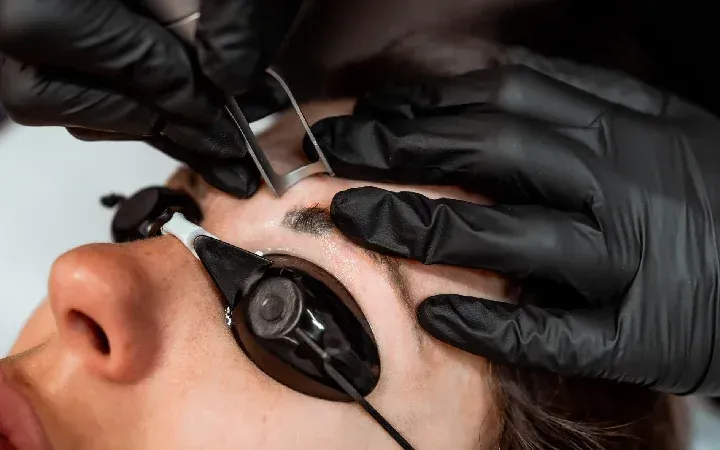
Micropigmentation removal, whether by laser or dermograph, is a safe treatment when performed in a medical-aesthetic center with certified materials and by a trained professional. Nevertheless, it requires clinical selection.
Paramedical micropigmentation at Instituto de Benito is led by a specialist dedicated exclusively to this discipline, trained in cosmetic and paramedical technique and recognized as a leading name in the specialist media.

€90 per session with laser, €120 per session with dermograph. Body tattoos are assessed in consultation because the price depends on size and characteristics.
It depends on the color of the pigment, the area and the goal. Laser is more effective and more economical for well-executed black or dark pigments. The dermograph is the option of choice when pigments have shifted color, are not black, or when laser has already failed. The final decision is made at the initial consultation.
Usually between 2 and 6 sessions, 6–8 weeks apart. The exact number is determined as treatment progresses.
Because the product applied (an American extraction solution) is more costly, the session requires more application time area by area, and the technical precision is greater. In return, it works on pigments that laser cannot remove.
This is one of the clearest indications for using the dermograph. The product recovers what the laser has left behind, including color shifts caused by the laser's own oxidation.
It is well tolerated with topical anesthetic cream. The sensation is similar to a micropigmentation session.
After each session, over the following 7–10 days you will see a small scab form in the color of the pigment being extracted. This is the desired effect with both methods.
Yes, once the area has healed completely (at least 8 weeks after the last removal session).
There is a risk of scarring or hyperpigmentation. That is why it is essential to follow the aftercare instructions.
Usually yes, although it depends on the type of original pigment, its depth and its age. Some very deep pigments may leave a minimal residue that is no longer visible to the naked eye.
No, provided the aftercare instructions are followed. When properly performed and properly cared for, neither technique leaves a visible scar.
Yes, but it is assessed in consultation because the price depends on size, colors, age and area. It is not billed as a standard session.
Average rating: 4.8 / 5
 Feed


