Dr. Cristina Cobaleda specialist in aesthetic medicine
Aesthetic physician
Medical license no. 51612
Leading doctor in polylactic acid
The doctor sees patients in BarcelonaView medical profile
Polylactic acid does not fill: it stimulates your skin to produce its own collagen and gradually regain firmness and volume over several sessions.
From: 450 €

Treatment duration:
30-45 minutes
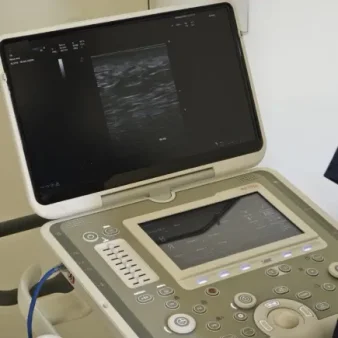
With NESAI® Derm ultrasound
Included in Barcelona (subject to the doctor's assessment)
Standard protocol
2–3 sessions
Interval between sessions
4–6 weeks
Vials per session
1–2
Full result
3–6 months

Polylactic acid is a collagen biostimulator: a biocompatible, resorbable substance that, once injected, stimulates the body to produce its own new collagen for months. The result is a gradual, natural and long-lasting improvement in the firmness, structural volume and quality of the skin on the face, neck, décolletage, arms or buttocks.
Which areas can we treat?
Gradually restores structural support in the midface

Improves skin laxity and skin quality

Firmness and skin quality without surgery, with a gradual result

Reduces sagging (“bat wings”)


The treatment is carried out entirely in a medical office at Instituto de Benito in Barcelona or Madrid, in an outpatient session that is always planned and performed by a licensed aesthetic doctor. It consists of the following steps:

Before the treatment, you have a consultation with the aesthetic doctor at Instituto de Benito, who studies your case, listens to your goals, rules out contraindications and designs a personalized plan. The first aesthetic medicine consultation costs €50 (deductible from your first treatment).
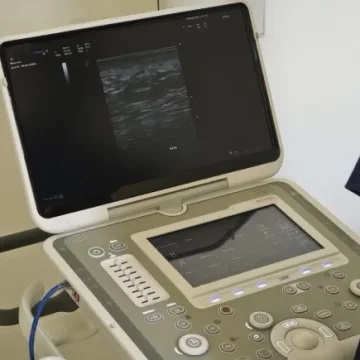
When the doctor considers it necessary, a NESAI Derm ultrasound is performed in Barcelona to assess the skin before treating: dermis thickness, density, collagen, fibers and sun damage.

Preparation is simple: the area must be clean and free of creams. The doctor will tell you whether you should avoid any medication (anticoagulants, NSAIDs) in the days beforehand to minimize bruising, and will discuss with you any circumstances relevant to your safety.

The doctor disinfects the area, applies topical anesthesia if necessary and performs the microinjections with very fine needles, following the plan designed. The session is carried out entirely in the doctor's office and the patient returns to their routine immediately.

Results appear within the timeframe expected for the treatment, with a natural, harmonious finish. The doctor gives you home care instructions and schedules your follow-up appointments.

In the Spanish market, a polylactic acid session ranges from €400 to €900 depending on the clinic, the product, the number of vials and the areas to be treated.
At Instituto de Benito, treatment starts at €450 per session for the facial presentation and €900 for the body presentation for larger areas. Treatment specifically with Sculptra®, the best-known PLLA brand, costs €550 per session. The initial medical consultation costs €50 and is deductible from your first treatment.
As the usual protocol involves 2 to 3 sessions, the approximate cost of the full treatment is between €900 and €1,350 for the facial presentation, and between €1,100 and €1,650 if you choose Sculptra®.
We prefer to give you these figures from the start. Comparing prices for a single session is misleading when the result depends on the full protocol, and knowing which product is being used is as relevant as knowing how much it costs.
The final price depends on the area or areas to be treated, the product used and the number of sessions the doctor recommends after the consultation. We offer financing for longer treatments, as well as session packages.
When deep support has been lost, not just at the surface.
To firm the face and neck without surgery.
Body application with a specific presentation.
The change appears over 2-3 months, with no sudden effect.
As an alternative or complement to a facelift.
To prolong the result of surgery.

Disadvantages and limitations of polylactic acid
An aesthetic doctor from the Instituto de Benito team assesses the loss of structural volume and decides whether the indication is polylactic acid, high-density hyaluronic acid or a combination with other treatments.
Meet the Instituto de Benito team that performs this treatment:





Polylactic acid is a biostimulator with a gradual response over months; at Instituto de Benito we prescribe it only when the indication is clear (moderate to significant structural loss), never as a light touch-up.
Patient safety comes before any aesthetic goal. We work with audited clinical protocols, medical devices with medical CE marking and batch traceability, single-use instruments, dedicated aesthetic medicine rooms and personalized follow-up between sessions. We never delegate a medical-aesthetic procedure to non-medical staff.
Polylactic acid carries medical CE marking as a medical device and is recognized by the Spanish Society of Aesthetic Medicine (SEME) as one of the biostimulators with the longest documented duration (18-24 months) in the aesthetic medicine literature. It is a biocompatible, resorbable material that has been used for decades in surgery (resorbable sutures), with a very well-characterized safety profile.
Polylactic acid (PLLA) is a collagen biostimulator: a biocompatible, resorbable substance that, once injected, stimulates the body to produce its own collagen for months. It is not a filler: it does not add external volume, but improves the firmness and structure of the skin from within.
Sculptra® is a brand of poly-L-lactic acid, the best known on the market. Every Sculptra treatment is polylactic acid, but there are other presentations of the same active ingredient. At IdB, treatment starts at €450 per session and the Sculptra® presentation costs €550.
Because of the cost of the product, not the procedure. PLLA presentations differ in particle size, concentration and reconstitution protocol, which determines the cases each one is indicated for. The choice is made on clinical grounds during the consultation, not on price.
The main ones are that the result is not immediate (4-6 weeks), that it requires 2 to 3 sessions and that it is not reversible: unlike hyaluronic acid, it cannot be dissolved with hyaluronidase. There is also a low risk of nodules, which is minimized with correct dilution and the prescribed massage.
From €450 per session for the facial presentation and €900 for the body presentation. Treatment with Sculptra® costs €550 per session. The full protocol of 2-3 sessions is between €900 and €1,650 depending on the product. The initial medical consultation is €50, deductible from your first treatment.
Between 2 and 3 sessions spaced 4-6 weeks apart, with maintenance every 12-24 months. The exact number depends on the degree of structural loss and on the collagen density measured with NESAI®, not on age.
The improvement starts to become noticeable at 4-6 weeks and the result is established at 2-3 months. If you notice slight volume right after the session, it is due to the reconstitution solution and is reabsorbed within 24-72 hours.
The massage distributes the product evenly through the tissue and reduces the risk of nodules forming. The schedule is 5 minutes, 5 times a day, for 5 days. It is the most important post-treatment instruction and it is not optional.
Hyaluronic acid is a filler: it adds volume immediately and is reversible with hyaluronidase. Polylactic acid is a biostimulator: it does not fill, it prompts the skin to make its own collagen, with a gradual result, longer duration and no possibility of reversing it.
Yes. There is a facial presentation and a body presentation for larger areas such as the buttocks, arms or décolletage, with a different amount of product and price. We work with different PLLA brands, including Sculptra®.
When an immediate result is needed, when the goal is to augment a very defined area such as the lips, when skin laxity is advanced and requires surgery, or when the patient prefers a reversible treatment. In those cases we will suggest another alternative.
Average rating: 4.8 / 5
 Feed