Published on 27 April 2026
Polylactic acid: Stimulate your own collagen
Polylactic acid is an injectable biostimulator used in aesthetic medicine to rejuvenate the skin progressively and naturally.

What is polylactic acid?
Polylactic acid is an injectable biostimulator used in aesthetic medicine to rejuvenate the skin progressively and naturally. It is a biocompatible and biodegradable substance, designed to integrate safely into the body and be reabsorbed over time.
It is composed of PLLA (poly-L-lactic acid), a synthetic polymer widely used in medicine for decades, especially in absorbable sutures. Its application in aesthetics is based on its ability to activate the natural mechanisms of skin regeneration.
Unlike other treatments, polylactic acid does not act as an immediate filler but as a collagen stimulator. This allows for improved firmness, density, and quality of the skin from within. Thanks to this approach, it has become one of the most sought-after options for those looking for a non-surgical lifting effect, with progressive and natural results.
How it works: the lifting effect without surgery
Mechanism of action
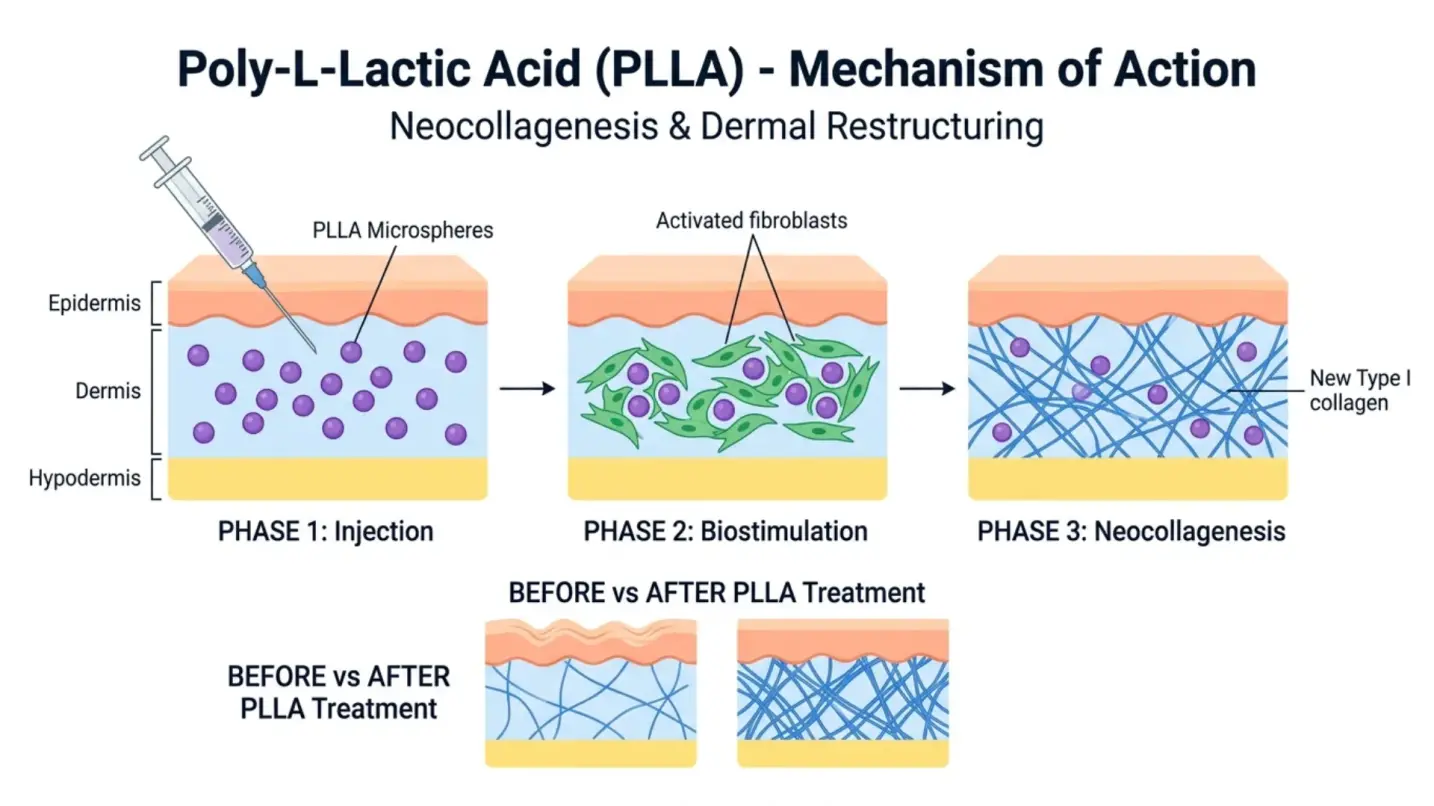
Polylactic acid works through a process called neocollagenesis, that is, the production of new collagen by the body.
After infiltration, PLLA microparticles are recognized by the immune system, activating a controlled response through macrophages. These cells initiate a biological process that stimulates the formation of collagen fibers around the product.
Over time, polylactic acid is naturally reabsorbed, but the generated collagen remains, providing greater firmness, elasticity, and structure to the skin.
In simple terms:
The treatment does not "fill", but reactivates the skin's ability to regenerate itself.
Difference from a traditional filler
Unlike other injectable treatments that provide immediate volume, polylactic acid:
- Does not introduce direct artificial volume
- Stimulates the body to generate its own volume
- Produces gradual and more natural results
This avoids the overloaded or artificial appearance and allows for a progressive improvement of the face.
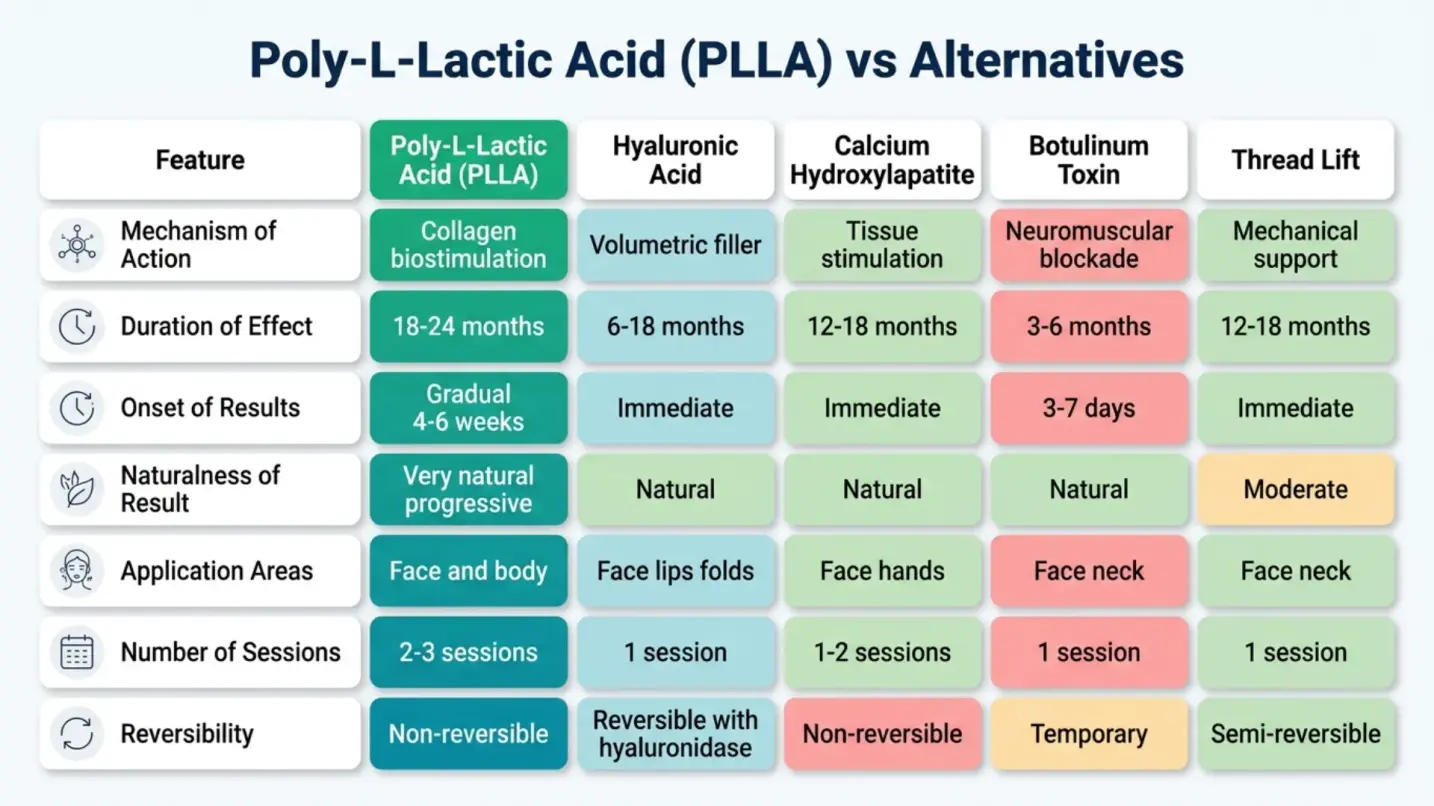
Polylactic acid vs hyaluronic acid vs thread lifts
Polylactic acid
- Result: progressive (visible in about 3 months)
- Duration: 18-25 months
- Mechanism: stimulates the production of own collagen
- Sessions: 2-3 sessions, approximately one month apart
Hyaluronic acid
- Result: immediate
- Duration: 6-12 months
- Mechanism: provides volume directly
- Sessions: 1 session
Thread lifts
- Result: immediate with progressive effect
- Duration: 12-18 months
- Mechanism: mechanical tightening + collagen stimulation
Where is it applied?
Polylactic acid can be applied in different areas of the body to improve skin quality and combat sagging:
- Cheeks and cheekbones: provides structural support
- Temples: corrects hollows
- Jawline and facial contour: redefines contours
- Nasolabial fold: softens folds
- Neck and décolleté: improves texture and firmness (differential area)
- Hands: rejuvenates the skin and improves its appearance
Its versatility makes it a very complete treatment, especially in areas where collagen loss is more evident. -Dr. Irene Cruz
Results: when and how they are seen
The results of polylactic acid appear progressively:
- First effects: between 3 and 6 weeks
- Complete result: between 3 and 6 months
This is because the treatment depends on the natural production of collagen. -Dr. Irene Cruz
It is important to understand that there should not be an immediate change, as this would indicate a filling effect and not biostimulation.
Results can last up to 25 months, depending on the patient and the applied protocol.

Who is a candidate and who is not?
Ideal candidates
- People between 35 and 65 years old
- Mild or moderate sagging
- Interest in natural and progressive results
Contraindications
- Active autoimmune diseases
- Pregnancy or breastfeeding
- Infections in the treatment area
- Tendency to keloid scarring
Medical assessment is essential to determine the suitability of the treatment. -Dr. Irene Cruz
Risks and side effects
Expected effects
- Redness
- Mild swelling (24-48h)
- Mild bruising
- Uncommon effects
- Subcutaneous nodules (incidence less than 2% with proper technique)
According to the Spanish Society of Aesthetic Medicine, these effects are rare when the treatment is performed correctly. -Dr. Irene Cruz
Key factors such as injection technique, correct product dilution, and post-treatment massage directly influence the safety of the procedure.

Related treatments at IdB
These are the treatment pages related to what you have just read. On each one you will find the price, the surgeon who performs it and real patient cases.

Polylactic Acid, Stimulate Your Own Collagen (PLLA)
Polylactic acid is a collagen biostimulator: a biocompatible and resorbable substance that, once injected, stimulates the body to produce its own collagen

Collagen inducers: firmer skin
Collagen inducers are medical-aesthetic treatments designed not to fill a gap immediately (as hyaluronic acid would), but to stimulate your own body to produce new collagen.
Frequently asked questions about polylactic acid
Does polylactic acid hurt during the treatment?
Polylactic acid treatment is well tolerated. It is applied with local anesthesia or the product already contains anesthetic, so discomfort is minimal. Most patients describe a slight pressure or discomfort, but not intense pain.
How many sessions of polylactic acid do I need on the face?
It is common to perform between 2 and 3 sessions, approximately one month apart. The exact number depends on the degree of sagging, age, and skin quality. This protocol allows for progressive collagen stimulation and more natural results.
When are the results of polylactic acid visible?
The first results of polylactic acid begin to be noticeable between 3 and 6 weeks, although the full effect appears between 3 and 6 months. This occurs because the treatment stimulates collagen production, it does not act as an immediate filler.
How long does the effect of polylactic acid last on the face?
The duration of polylactic acid can reach up to 18-25 months, depending on the patient and the applied protocol. It is one of the longest-lasting treatments within non-surgical aesthetic medicine.
Is polylactic acid better than hyaluronic acid?
It's not that it's better, but different. Polylactic acid stimulates collagen and offers progressive and long-lasting results, while hyaluronic acid provides immediate volume. The choice depends on the type of aging and the desired outcome.
Can polylactic acid be combined with other aesthetic treatments?
Yes, polylactic acid can be combined with other treatments such as botulinum toxin, hyaluronic acid, or technologies like focused ultrasound. In fact, the combination often offers more complete and balanced results.
Is polylactic acid safe? Does it have side effects?
Polylactic acid is a safe treatment when performed by a qualified physician. The most common side effects are mild, such as swelling or small bruises. Serious complications are very rare if the technique is correct.
What is the difference between polylactic acid and thread lifts?
Polylactic acid improves skin quality by stimulating collagen from within, while thread lifts produce an immediate lifting effect through mechanical traction. They are different treatments that can even be combined.