Rejuvenate your skin with Frax Laser
Erase spots, acne scars, stretch marks, and wrinkles with a personalized and planned medical protocol
Session 290€

Treatment duration:
20-40 minutes
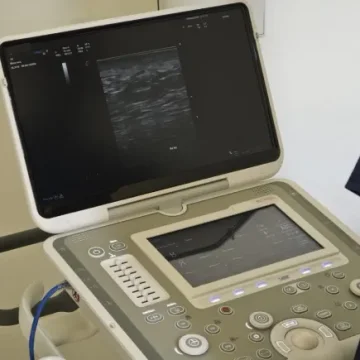
With NESAI® ultrasound
Included
Sessions:
2–3 + maintenance
What is the Frax laser?
The Frax laser is a non-ablative fractional laser developed by Nordlys (Frax Pro system) that acts on the deep dermis through controlled heat micro-columns, keeping the epidermis intact. This action stimulates the natural synthesis of collagen and elastin and produces progressive skin remodeling.
Frax is a non-ablative fractional laser that respects the epidermis and works on the dermis with heat micro-columns to produce new collagen. The key difference between Frax 1550 and Frax 1940
Frax is a non-ablative fractional laser that respects the epidermis and works on the dermis with heat micro-columns to produce new collagen. The key difference between Frax 1550 and Frax 1940 is the depth: 1550 nm works on scars, stretch marks, and deep texture; 1940 nm corrects spots and superficial sun damage.
Areas we treat with Frax laser
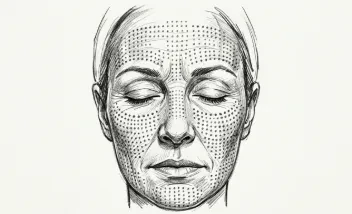
Full face
Forehead, cheeks, jawline contour, perioral and periocular. The most demanded area for texture, pores, and fine wrinkles.

Neck and décolleté
Areas with thin skin and very exposed to the sun; Frax restores firmness and tone uniformity.

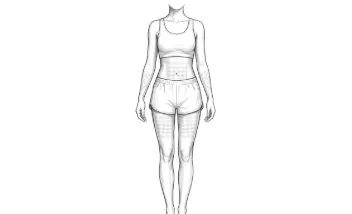
Body
Sun damage on décolleté, back, arms, and legs; skin tightening in areas with incipient sagging.

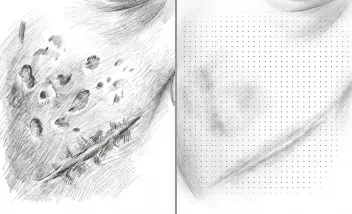
Acne and surgical scars
Atrophic (ice-pick, boxcar, rolling) and post-operative scars. Frax 1550 is the non-ablative gold standard.

Medical evidence and support
The Frax laser is authorized and registered as a medical device with CE marking by the Spanish Agency of Medicines and Medical Devices (AEMPS) and endorsed by the Spanish Society of Aesthetic Medicine (SEME) and the Spanish Society of Medical-Surgical Laser (SELMQ).
Published studies show:
- 40-70% improvement in atrophic acne scars after 4-6 sessions (Manuskiatti et al., Lasers Surg Med).
- 25-50% reduction in pigmentation of age spots and melasma with Frax 1940 nm.
- Measurable increase in type I and III collagen density from the 4th week post-session.
- Compatible with Fitzpatrick skin types I-V (including darker skin, where other ablative lasers are contraindicated).
The final indication is always signed by a licensed aesthetic doctor after NESAI® ultrasound evaluation, not a technician.
What does the Frax laser treatment consist of?
The treatment is carried out entirely in the medical office of the Instituto de Benito in Barcelona or Madrid, in an outpatient session designed and always applied by a licensed aesthetic doctor.
Personalized medical assessment:

The aesthetic doctor studies your case, rules out contraindications, and designs a personalized plan. The first aesthetic medical visit costs €50 (deductible from the first treatment).
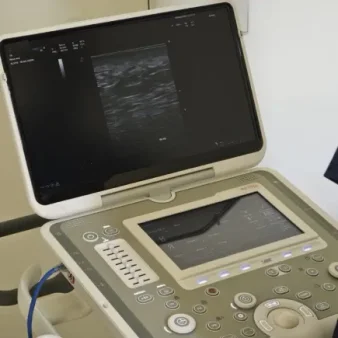
Analysis with NESAI®

Diagnosis of hydration, dermal density, collagen, and firmness with 99.99% accuracy.
Treatment preparation:

Arrive with clean skin, without makeup, creams, or self-tanners. Avoid intense sun exposure 15 days prior. Topical anesthesia in cream is applied for 30-45 minutes to minimize discomfort. If you are taking anticoagulants or oral retinoids (isotretinoin), inform during the assessment.
Application of the treatment in consultation

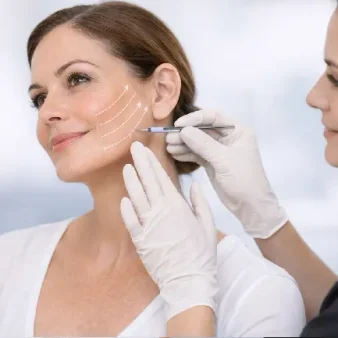
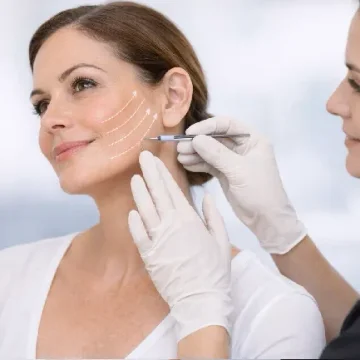
The doctor performs the pass with the Frax head over the area, with a cold air system for comfort. You will notice a controlled warm tingling. The duration varies between 20 minutes (localized area) and 45 minutes (face + neck + décolleté). You return to your normal life upon leaving.
Start looking how you want to feel:

The first changes (brightness, texture) are visible in 7-14 days. The full result is appreciated between 3 and 6 months after completing the plan, thanks to the progressive formation of new collagen.
Pre and post treatment of Frax laser


What is the price of Frax laser at Instituto de Benito
Session 250 €
The Frax Laser treatment adapts to the area and extent to be treated. Sessions for small areas, such as scars, isolated spots, or hands, are priced at 250 € per session, or a package of 4 sessions for 850 € (15% discount). For standard areas, such as face, neck, décolleté, or stretch marks, the price is 350 € per session, with a package of 4 sessions for 1,190 € (15% discount). The final cost may vary depending on the extent of the treatment and the number of passes the doctor determines after the personalized assessment with NESAI®. The first medical-aesthetic visit costs 50 €, deductible from the first treatment. Additionally, we offer financing for up to 24 months without interest and special packages for multi-session plans.
Are you suitable for Frax laser?
The Frax laser is indicated for people in good general health who meet any of these profiles. Final suitability is confirmed by the doctor after the personalized assessment.
- 01
Your skin is dehydrated or dull
Lack of radiance, feeling of tightness, or loss of "freshness" after summer, cold, or periods of stress.
- 02
You notice a loss of firmness and elasticity
First signs of mild sagging, especially in cheeks, jawline, or neck.
- 03
You have thin or sensitive skin
Skin that cannot tolerate more aggressive treatments but needs quality and skin density.
- 04
You seek a natural and progressive rejuvenation
You want to improve your skin without altering features or resorting to volumetric fillers.
- 05
You want to prepare your skin before an event
Provides luminosity and a glow finish that is especially noticeable in photographs.
- 06
You need a safe, medical treatment without downtime
Compatible with your routine: you enter, get treated, and return to your normal life.

Who is NOT suitable: contraindications of Frax laser
Patient safety comes before any aesthetic result. The Frax laser should not be performed or should be postponed in the following cases:
| Contraindication | Reason |
|---|---|
| Pregnancy and breastfeeding | No conclusive safety studies |
| Recent tanning or intense sun exposure | Risk of post-inflammatory hyperpigmentation (PIH). |
| Oral isotretinoin treatment (Roaccutane) | Discontinue at least 6 months prior due to scarring risk. |
| Active cold sore in the area | Viral reactivation; requires prior prophylaxis. |
| Active skin infection | Folliculitis, impetigo, herpes: risk of spreading. |
| Tendency to keloids | Risk of hypertrophic scarring. |
| Phototype VI (Fitzpatrick) | High risk of dyschromias; strict evaluation. |
| Active autoimmune diseases | Lupus, scleroderma, active vitiligo: unpredictable response. |
| Immunosuppression | Active cancer treatment, uncontrolled HIV, transplant recipients. |
| Pacemaker or defibrillator (nearby areas) | Prior cardiological evaluation. |
| Under 18 years old | Unless specific medical prescription. |
Risks and possible side effects of Frax laser
The Frax laser is a safe treatment when performed by a licensed doctor in an authorized center with approved medical equipment. However, every medical procedure has a profile of possible effects that it is honest to share with you.
How the Instituto de Benito minimizes these risks: 100% licensed medical team, Frax equipment with certified periodic calibration, asepsis protocols, dedicated aesthetic medicine room, planning with NESAI® and personalized follow-up between sessions. We never delegate the procedure to non-medical staff.
If after a session you experience intense pain, extensive blisters, fever, discharge, or persistent color changes, contact the clinic immediately.

Expected and mild reactions (self-limiting within 24-72 h)
- Erythema and feeling of warmth.
- Mild edema (swelling), especially in cheeks and eyelids.
- Pinpoint microcrusts that fall off in 4-7 days.
- Mild itching during healing.
Less common effects:
- Transient post-inflammatory hyperpigmentation (more common in phototypes IV-V).
- Temporary hypopigmentation.
- Reactivation of cold sores.
- Contact dermatitis to post-treatment cosmetics.
Uncommon complications:
- Blisters and superficial burns due to poor calibration.
- Atypical scars in patients with undetected keloid tendency.
- Superimposed bacterial infection if home care instructions are not followed.
Our medical group aesthetic medicine
An aesthetic doctor from the IdB team confirms if your case is a candidate for Frax laser or if a combined protocol is advisable (Frax + biostimulation, Frax + medical peel, Frax + microneedling with radiofrequency).


Commitment to the Instituto de Benito
The Frax laser is a class IIb medical device that should only be administered by a licensed aesthetic doctor after careful evaluation.
At the Instituto de Benito, patient safety takes precedence over any aesthetic goal. We work with audited clinical protocols, CE-marked medical laser equipment with certified maintenance, dedicated aesthetic medicine rooms, and personalized follow-up between sessions. We never delegate a medical-aesthetic procedure to non-medical staff.
Where to get the Frax laser treatment?
Related treatments
Frequently asked questions
What exactly is the Frax laser?
The Frax laser is a non-ablative fractional system by Nordlys that emits micro-columns of heat into the dermis to stimulate collagen and elastin without damaging the epidermis. It is applied in two wavelengths (1550 nm and 1940 nm) depending on the indication.
What is the difference between Frax 1550 and Frax 1940?
Frax 1550 penetrates deeper (up to 800 µm) and is indicated for acne scars, stretch marks, texture, and pores. Frax 1940 works more superficially and is the choice for spots, sun damage, melasma, and keratosis. In many cases, the doctor combines both in the same plan.
How many sessions are needed to see results?
You will notice brightness and texture improvement from the 1st-2nd session. For scars and stretch marks, 4-6 sessions are recommended, spaced 4 weeks apart. The final result is consolidated 3-6 months after the last session.
Is it painful?
No. We apply topical anesthesia 30-45 minutes beforehand and the handpiece incorporates cold air. The sensation is of heat with controlled itching, perfectly tolerable.
Is it the same as a CO2 laser?
No. CO2 is ablative (it vaporizes the epidermis, requires 7-10 days of downtime). Frax is non-ablative: it respects the epidermis and allows immediate return to normal life. CO2 provides more drastic results in a single session, but Frax is safer, more versatile, and compatible with higher phototypes.
Is it suitable for dark skin (phototypes IV-V)?
Yes. Frax is one of the few fractional lasers safe up to Fitzpatrick phototype V, always with parameters adjusted by the doctor after NESAI®. For phototype VI, strict evaluation is required.
How much does the complete Frax laser treatment cost at Instituto de Benito?
The Frax laser has two rates: €250 per session for a small area (isolated scar, localized spots, hands) and €350 per session for a standard area (face, neck, décolleté, or body stretch marks). The 4-session package applies a 15% discount (€850 or €1,190). The first medical visit is €50, deductible from the first treatment.
Can I have Frax laser in the summer?
It is preferable to avoid it between June and September or if you have tanned skin, due to the risk of hyperpigmentation. If you do it, strict SPF 50+ is mandatory and avoid sun exposure for 4 weeks.
How long does the result last?
The effects of new collagen last 12-18 months. We recommend an annual maintenance session to preserve skin quality.
Can I combine it with b*t*x or hyaluronic acid?
Yes. The most requested protocol is Frax + bio-revitalization or Frax + biostimulation with polylactic acid. Botox and fillers are preferably applied 2 weeks before or 4 weeks after Frax.
Can I work the next day?
Yes. You will have mild erythema and slight swelling for the first 24-72 hours, which can be perfectly camouflaged with makeup after 24 hours. It does not require sick leave.
What if I have melasma?
Melasma is preferably treated with Frax 1940 nm at gentle parameters combined with medical depigmenting agents. It is a delicate indication that requires evaluation by an expert aesthetic physician, as an aggressive protocol may worsen it.