Medically reviewed by Dr. Javier de Benito, licence no. 8038Published on 21 April 2026
What is the best age for a facelift?
There is no universal age for a facelift. Plastic surgeons usually place the main indication from the age of 45 onward, when skin laxity and the sagging of the deep tissues become more evident. Even so, the ideal age depends on the degree of sagging, the quality of the skin and each patient's goals, not just on how old you are.
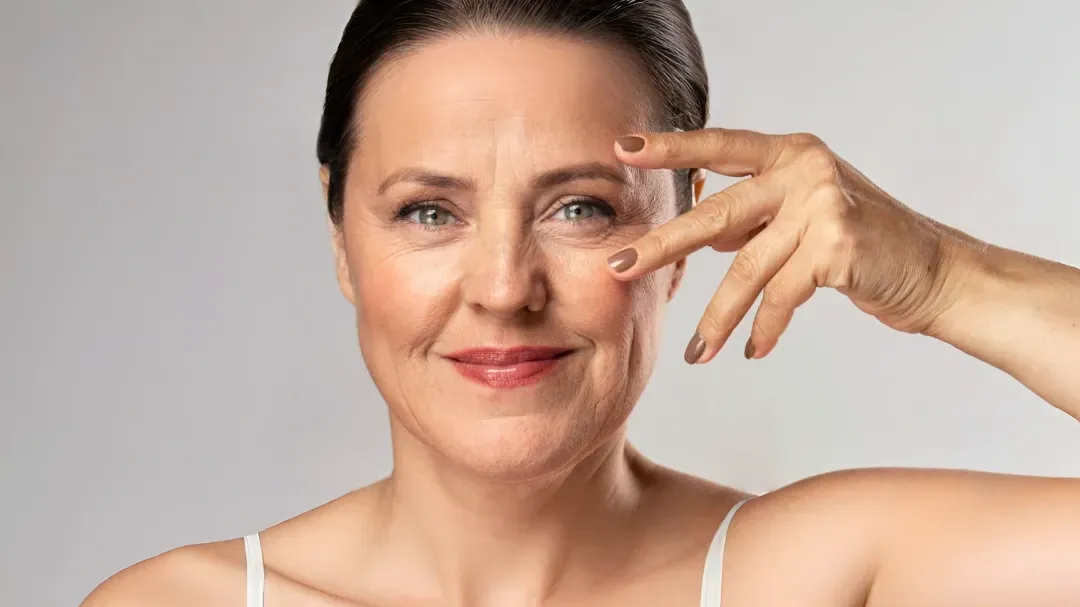
A facelift (rhytidectomy) is one of the most effective procedures for addressing the visible signs of aging. However, one of the most frequent questions is: when is it really necessary?
This article, reviewed by Dr. Javier de Benito, is a clear guide based on medical and aesthetic criteria to help you know when a facelift is the best option and when it is not.
What does a facelift correct?
When we talk about a facelift, there is something important to understand from the start:
It is not a skin treatment. It is a procedure that repositions the deep tissues of the face to where they were when the face was young, before they dropped because of gravity, lifestyle or genetics. A facelift consists of returning these tissues to their original position and redraping the skin over them, removing the excess, without needing to pull it tight, which avoids distorted-looking faces
Problems it corrects:
- Sagging in the cheeks and jawline
- Pronounced nasolabial folds
- Loss of facial contour
- Double chin or excess skin on the neck
- Descent of the facial tissues
Important: it does not improve skin quality (dark spots, texture), but the structure.
Clear signs that you may need a facelift
Marked loss of jawline definition
When you start to see the so-called:
- “double chin effect”
- “marionette line”
This indicates that the tissues have dropped, not just lost volume.
Excess skin on the neck
The neck often gives away your age before the face does.
It is recommended when there is:
- Sagging skin
- Visible platysmal bands
Biological age vs. chronological age
It does not depend on age alone, but generally:
- Between 40 and 55 → the first candidates
- 55+ → more evident cases
The key is not age, but the degree of structural aging.
Deep nasolabial fold
When
- The fold is very deep and pronounced even at rest
- There is facial sagging (ptosis) in the cheeks or midface
- Hyaluronic acid fillers no longer correct it or last a very short time
- There is excess skin or visible sagging
Marionette lines
- The lines are deep and visible even at rest
- There is sagging along the jawline (double chin or “jowls”)
- The corners of the mouth are downturned
- Fillers no longer work well or last a very short time
- You are looking for a long-lasting result (years)
Bands in the submental area (under the chin)
You should consider a neck lift when:
- The bands are very visible at rest, not just when you make facial expressions
- There is marked sagging in the neck and under the chin
- The jaw angle has been lost (a poorly defined neck)
- The skin is lax or there is excess skin
- Non-surgical treatments no longer work or do not last long
Double chin caused by excess fat
- There is fat + significant skin laxity
- The neck is sagging and the jawline lacks definition
- There is excess skin after weight loss or due to age
When is a facelift NOT necessary?
When the problem is only skin aging; in that case, what needs treating are the fine wrinkles, through aesthetic medicine procedures and mesotherapy
Cases where it is not recommended:
- Mild or early sagging
- Volume loss only (fillers are better)
- Skin quality problems (laser, peels)
- Unrealistic expectations
- In these cases, a less invasive approach is ideal.
Where is the line between aesthetic medicine and surgery in facial aesthetics?
The line between aesthetic medicine and facial cosmetic surgery is defined mainly by the degree of invasiveness, the use of an operating room and how deep the procedure goes into the tissues.
“The face is like a car that, after many years of use, shows dents, scratches and chipped paint. Instituto de Benito is like the garage where you take the car to be fixed: normally, when there are dents and bodywork problems, the body repair technician goes first (in this case the surgeon), and the paintwork, the scratches... are looked after by the aesthetic medicine department. ”-Dr. Javier de Benito
It depends on how much the face and neck have deteriorated. When the first signs of aging appear, they are very often treated with aesthetic medicine, such as:
Before surgery, the following can be considered:
- Botulinum toxin
- Biostimulators (collagen)
- Polynucleotides
- Exosomes
- Radiofrequency
- Device-based treatments
They work best in the early stages of aging.
But to answer the big question: do I need a facelift?
The answer to this question depends on two people. One is the surgeon, who either sees that the defect clearly calls for correction with a facelift or tells you that you can wait. The other is the patient, whose answer counts when they feel that it is very noticeable, that it lowers their quality of life and that they would be much happier without it.
The severity of the defect is always judged by the brain -Dr. Javier de Benito
Where you can have it done
We perform facelifts at both of our centers. For each one you can see the price, the team that will look after you and real cases of patients from that city.

Frequently asked questions
How do I know if I need a facelift?
If you have visible sagging, loss of facial contour, a double chin or drooping tissues, and non-invasive treatments no longer work or do not last long, you are probably at the right point for a facelift.
Does a facelift remove wrinkles and improve the skin?
No. A facelift does not improve skin quality (dark spots, texture or fine wrinkles). It acts on the deep tissues, repositioning them to restore the facial structure.
When are non-surgical treatments no longer enough?
When:
- The results are barely visible or do not last long
- There is excess skin or sagging
- The problem is no longer volume, but the position of the tissues
How long does a facelift last?
The results usually last between 8 and 12 years, depending on aging, lifestyle and genetics.
Does a facelift look unnatural?
No, if it is done well. A good facelift repositions without over-tightening, avoiding the “pulled face” or unnatural look.
When is a facelift NOT recommended?
It is not recommended when:
- The sagging is mild
- There is only volume loss
- The problem is skin quality
- There are unrealistic expectations
In these cases, it is better to opt for aesthetic medicine.
Is it better to wait or to have a facelift earlier?
Waiting too long can mean that:
- The aging is more advanced
- More complex procedures are needed
But having it done too early is also unnecessary.
Who decides whether I need a facelift?
The decision is shared:
- The surgeon assesses whether it is technically necessary
- The patient decides whether it affects them enough to treat it
Your personal perception of aging is key.
Does a facelift replace aesthetic medicine?
No, they complement each other. A facelift corrects the structure, while aesthetic medicine improves the skin and maintains the results