Medically reviewed by Eva Verdasco wellness and cabin specialist, Alicia Castro wellness specialistPublished on 19 May 2026Updated on 28 September 2026
Types of Cellulite and How to Eliminate It
Cellulite affects between 80% and 90% of women from puberty onwards, regardless of their weight or physical condition.
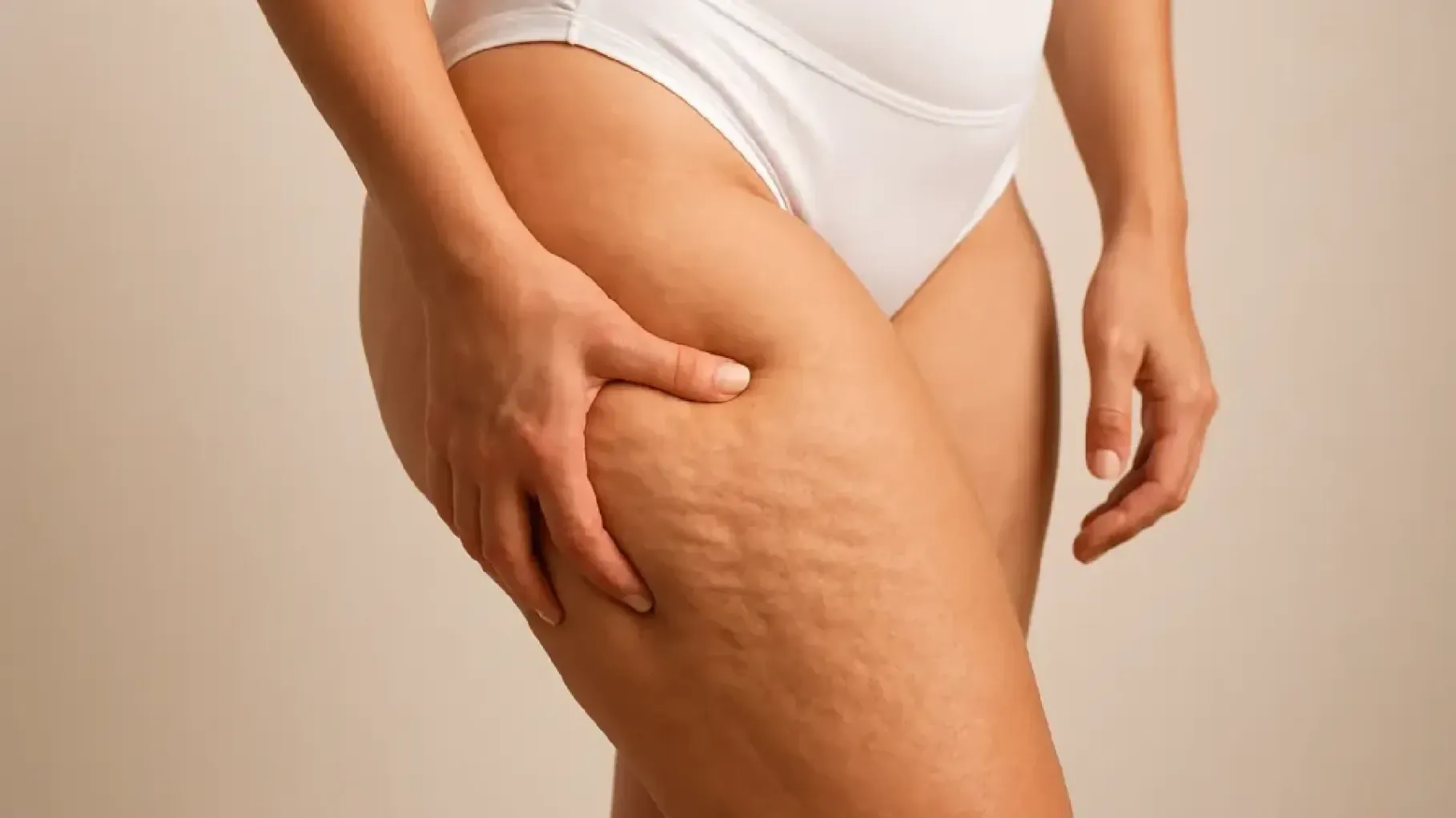
Cellulite affects between 80% and 90% of women from puberty onwards, regardless of their weight or physical condition. But not all cellulite is the same: there are four types—hard, soft, edematous, and mixed—and each responds to a different treatment. Applying the same protocol to all is the main reason why so many "anti-cellulite" treatments don't work.
In this guide, we explain how to identify each type, why it appears, and which medical treatments are truly effective in eliminating it.
What Exactly Is Cellulite?
Cellulite, technically known as edematous-fibrosclerotic panniculopathy or gynoid lipodystrophy, is an alteration of the subcutaneous tissue in which three phenomena combine:
- Accumulation of fat in adipocytes.
- Fluid retention in the interstitial tissue.
- Fibrosis of collagen surrounding fat cells.
- This combination is what causes the characteristic "orange peel" or "mattress" appearance on thighs, buttocks, hips, abdomen, or arms.
Why Not All Cellulite Is Treated the Same
When a patient tells us "I've tried everything and nothing works," almost always the problem is the same: she has treated her cellulite as if it were a single entity, when in fact there are several types with different causes.
- Cellulite due to fluid retention is not eliminated with radiofrequency: it needs drainage.
- Hard and fibrous cellulite does not respond to pressotherapy: it requires breaking the fibrous tissue.
- Flaccid cellulite does not improve with topical anti-cellulite treatments: it needs collagen stimulation and firmness.
That's why at Instituto de Benito the first step is always a medical diagnosis, with clinical evaluation and high-resolution ultrasound, to identify what type (or combination of types) each patient presents and design a personalized protocol.
Treatments to Feel Better
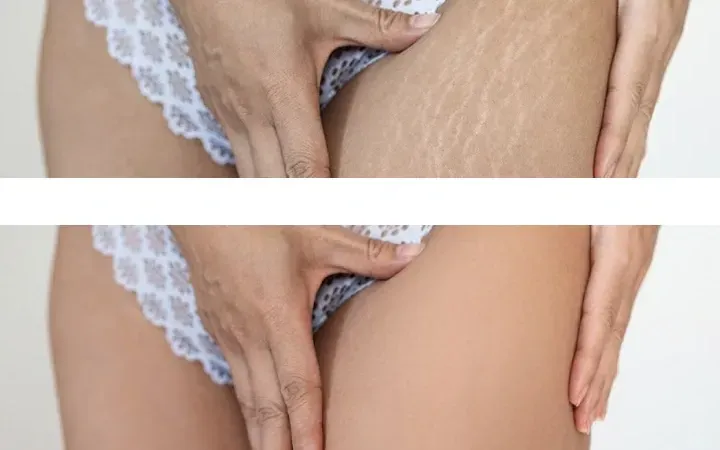
The 4 Types of Cellulite
1. Hard or Fibrous Cellulite
How to recognize it. It is the "compact" cellulite: to the touch, it feels firm, the dimples are deep but barely move with posture, and the skin maintains its shape even at rest. It is typical of young women, athletes, and those with good muscle tone.
Why it appears. The connective tissue between adipocytes is thickened and fibrosed, which "compartmentalizes" the fat and hardens the area. Genetic factors and lack of collagen elasticity predominate.
What makes it improve. Treatments that break the fibrosis and mobilize trapped fat:
- Body mesotherapy with lipolytic and firming cocktails.
Radiofrequency equipment and non-invasive lipolysis (Body Slim program).
In advanced cases, HD liposculpture or liposuction to reshape the silhouette.
2. Soft or Flaccid Cellulite
How to recognize it. The skin looks wavy, with folds that increase when standing or when the patient pinches the area. There is a lack of tone, a sensation of "loose skin," and it is often accompanied by some muscle flaccidity. It is common after pregnancies, significant weight loss, or from the age of 40-45.
Why it appears. Loss of collagen and elastin, sedentary lifestyle, weight fluctuations, and decreased muscle tone. The fat, not being well "supported," shifts with gravity.
What makes it improve. Treatments that firm and tighten the tissue:
- Monopolar body radiofrequency to stimulate collagen.
- Mesotherapy with firming and biostimulating agents.
- Body Slim program combining non-invasive lipolysis + radiofrequency.
- In advanced flaccidity with excess skin, evaluation of body lifting (arms, legs, body lift).
3. Edematous (or Dermatosis) Cellulite
How to recognize it. It is "spongy" cellulite: the area looks swollen, heavy, with a feeling of tension, and clearly worsens throughout the day. It usually affects legs and ankles, leaves a mark when pressed, and worsens with heat, sedentary lifestyle, or the premenstrual phase.
Why it appears.
The main problem is fluid retention and poor lymphatic and venous circulation. It is often associated with venous insufficiency, hormonal alterations, or diets high in salt.
What makes it improve.
Anything that activates drainage and improves circulation:
- Medical pressotherapy and lymphatic drainage.
- Body mesotherapy with vasoactive and draining cocktails (this is, in our experience, the cellulite that responds best to mesotherapy).
- Reduction of sodium, adequate hydration, and continued light physical activity.
- Vascular evaluation if there is suspicion of venous insufficiency.
4. Mixed Cellulite
How to recognize it. It is the most common in consultation. The patient presents several areas with different characteristics: firm and fibrous thighs, more flaccid buttocks, swollen legs at the end of the day. Each area behaves differently, and that's why no isolated treatment achieves complete results.
- Why it appears. It combines several mechanisms: fibrosis + retention + flaccidity. It usually reflects several accumulated factors (age, hormones, habits, pregnancies, weight).
- What makes it improve. Combined and personalized protocols, adjusting the treatment to each area of the body:
- Prior ultrasound diagnosis to map which type predominates in each area.
- Mesotherapy with different cocktails depending on the area.
- Body Slim adapting powers and technologies by region.
- Radiofrequency in the flaccid areas, pressotherapy in the more edematous ones.
Comparative Table: The 4 Types of Cellulite at a Glance
| Type | Appearance and Feel | Main Cause | When It Worsens |
|---|---|---|---|
| Hard / Fibrous | Compact, firm, deep dimples. Visible even at rest. | Collagen fibrosis + genetics. Usually appears young. | Static, doesn't change much with posture. |
| Soft / Flaccid | Wavy, "loose skin," shifts with gravity | Loss of collagen and muscle tone. Postpartum, weight loss, menopause | When standing or pinching the area. |
| Edematous / Dermatosis | Spongy, swollen, feeling of heaviness. Leaves a mark when pressed. | Fluid retention and lymphatic/venous insufficiency. | Throughout the day, heat, premenstrual. |
| Mixed | Combines various textures depending on the area. The most common. | Combination of fibrosis, retention, and flaccidity. | Variable depending on the area. |
Related treatments at IdB
These are the treatment pages related to what you have just read. On each one you will find the price, the surgeon who performs it and real patient cases.
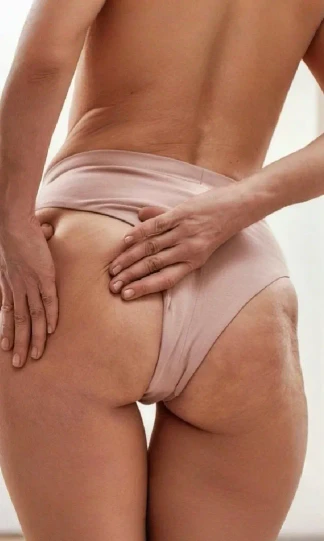
Reduce Cellulite in Barcelona
The treatment to eliminate cellulite is a manual reduction technique that combines deep kneading manoeuvres, friction and areas with cellulite or localised adiposity.

Monopolar body radiofrequency in Barcelona
Monopolar body radiofrequency is an advanced aesthetic treatment that uses controlled thermal energy to stimulate collagen and elastin production in the deep layers of the skin.
Frequently Asked Questions
Can cellulite be completely eliminated?
In most cases, we talk about visibly improving and maintaining the result, not eliminating 100%. Cellulite has a genetic, hormonal, and postural component that does not disappear. What we achieve with a personalized plan is to reduce dimples, improve firmness and texture, and prevent its progression to more advanced stages.
How many sessions will I need?
It depends on the type and degree. As a reference: 6-10 sessions of mesotherapy or Body Slim to see sustained changes, followed by monthly or quarterly maintenance.
At what age is it best to start treating it?
The sooner you act, the better it responds. Treating edematous or soft cellulite in its initial phase is much easier than intervening when it has already fibrosed.
Can I combine several treatments in the same session?
Yes, and in fact, combined protocols are the ones that work best for mixed cellulite. It is the medical team who decides which techniques to combine and in what order.
Do I have to stop exercising during the treatment?
On the contrary: exercise, especially strength training, enhances the results. We only recommend avoiding very intense workouts in the 24 hours following mesotherapy.