Medically reviewed by Eva Verdasco wellness and cabin specialistPublished on 13 February 2026Updated on 5 October 2026
Why do we get dark spots on our skin?
Dark spots appear on the skin when melanocytes produce melanin irregularly or in excess. The three most common causes are cumulative sun exposure, hormonal changes and previous inflammation of the skin. They are not all the same: a solar lentigo, melasma and an acne mark each have a different origin and behave differently, and knowing which one you are dealing with is what determines what can be done.
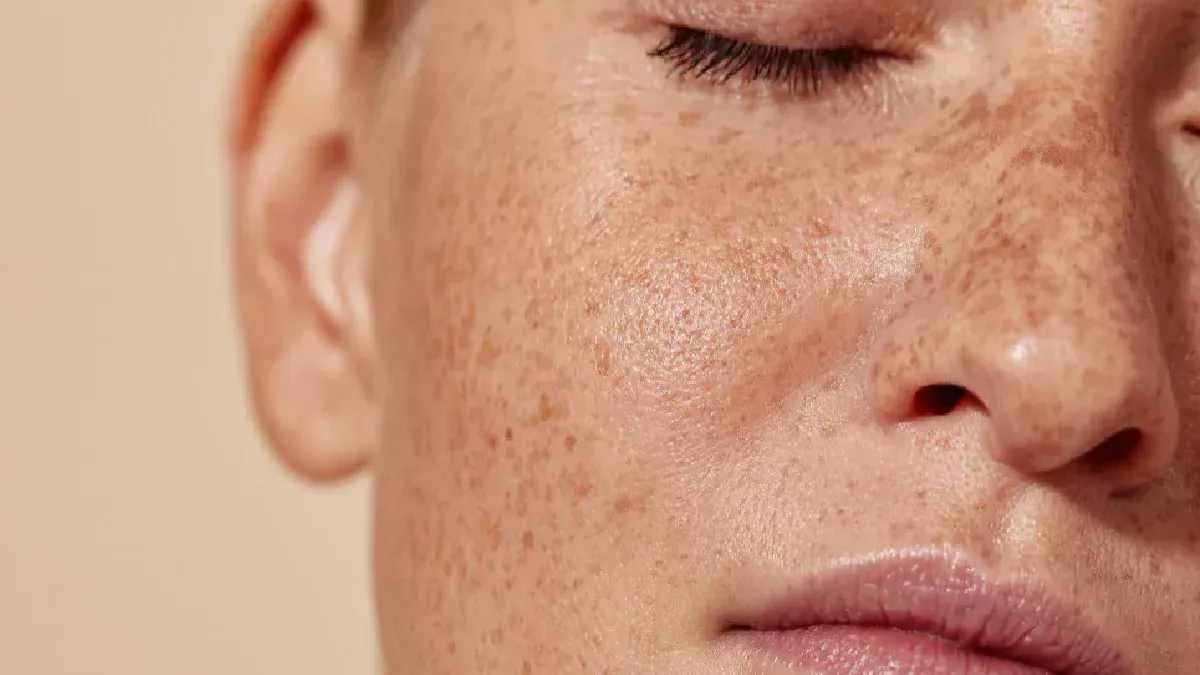
In this article we explain why a dark spot forms, how to tell the most common types apart, when you should see a dermatologist, and what professional skincare can do to improve the tone and radiance of your face.
2. Why does a dark spot form on the skin?
The role of melanin
Skin color depends mainly on melanin, a pigment synthesized by cells called melanocytes, which sit in the deepest layer of the epidermis. Melanocytes make melanin and transfer it to keratinocytes, the cells that form the surface of the skin. When that process is disrupted, because more pigment than usual is produced or because it is distributed unevenly, a spot appears.
There are two types of melanin: eumelanin, which predominates in darker skin, and pheomelanin, which is more present in fair skin types. That difference explains why some skin tans and other skin turns red, and why each skin type develops different kinds of spots.
Not all spots are caused by melanin. An excess of hemoglobin produces reddish spots, and an excess of keratin produces yellowish ones. Working out where the color comes from is the first step in knowing whether a spot can improve, and with what.
The three main causes: sun, hormones and inflammation
- Ultraviolet radiation. This is the most decisive factor. The skin responds to UV radiation by producing melanin as a defense, and that response has two phases: an immediate, temporary pigmentation caused by oxidation of the existing pigment, and a delayed pigmentation that appears a few days after exposure and does involve a real increase in melanin synthesis. Repeated year after year, that response stops being uniform and concentrates in specific areas.
- Hormonal changes. Estrogens and melanocyte-stimulating hormone activate pigment production. That is why pregnancy, oral contraceptives and hormone replacement therapy are recognized triggers of melasma.
- Previous inflammation. Any inflammatory process in the skin (a pimple, a wound, a burn, an allergic reaction) can leave a dark mark as it heals. This is known as post-inflammatory hyperpigmentation, and it is especially common in darker skin types.
On top of this come two factors that cannot be changed: genetic predisposition, which means two people with the same sun exposure can develop very different spots, and skin aging, which gradually alters the way melanocytes work.
What does it mean when dark spots appear "out of nowhere"?
Almost no spot really appears overnight. What happens is that the damage that caused it came earlier and takes weeks or months to become visible. These are the triggers most often overlooked:
- Sun exposure from weeks ago. Delayed pigmentation takes days to appear and can keep intensifying. That is why spots are "discovered" in September and October, when the tan fades and the contrast makes them obvious.
- Photosensitizing medications. Some antibiotics, anti-inflammatories, diuretics and antiarrhythmics increase the skin's reactivity to the sun. If the spot coincides with a new treatment, mention it to your doctor: never stop taking it on your own.
- Perfumes and cosmetics combined with sun. Contact with certain fragrances before sun exposure can leave a streak-shaped hyperpigmentation.
- Heat and irritation. Waxing, heat-based devices or an overly aggressive treatment can activate a latent melasma.
- A forgotten inflammation. A pimple or the rubbing of a piece of clothing leaves pigment weeks after it has healed, when nobody connects the spot with its origin anymore.
If a spot appears truly suddenly, grows quickly, bleeds or itches persistently, do not wait: book an appointment with a dermatologist.
Remove your dark spots effectively
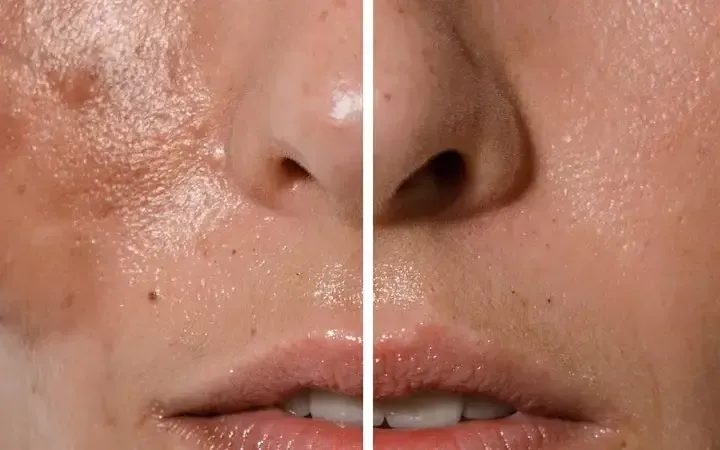
Types of dark spots on the skin and how to tell them apart
Identifying the type of spot is what determines what makes sense to do. Two lesions that look the same to the naked eye can respond in opposite ways to the same care.
| Tipo | Aspecto | Dónde aparece | Causa principal | ¿Desaparece sola? |
|---|---|---|---|---|
| Solar lentigo | Round or oval, uniform brown, well-defined edges | Face, backs of the hands, décolletage, shoulders | Cumulative UV radiation, from age 30-40 | No |
| Senile lentigo | The same, more numerous and sometimes merging | Sun-exposed areas | Cumulative sun damage, from age 50 | No |
| Melasma | Grayish brown, irregular edges, symmetrical, in patches | Forehead, upper lip, cheeks, chin; also hands and forearms | Hormonal, with the sun as the trigger | No; it improves and recurs |
| Ephelides (freckles) | Small, light, darken with the sun | Nose, cheeks, shoulders, arms, especially in fair skin types | Genetic, especially in fair skin types | They fade in winter |
| Post-inflammatory hyperpigmentation | Brown or purplish, in the shape of the previous lesion | Wherever there was acne, a wound, a burn or friction | Previous skin inflammation | Yes, over months or years |
| Periocular darkening | Diffuse grayish or purplish tone | Lower eyelid | Vascular and genetic; it is not always melanin | No |
| White spots | Loss of pigment, sharp or diffuse edges | Variable | Vitiligo, pityriasis versicolor, pityriasis alba, guttate hypomelanosis | Depends on the cause |
| Actinic keratosis | Rough to the touch, pink or brown, scaly | Face, scalp, backs of the hands | Chronic sun damage. It is a precancerous lesion | No. It requires a dermatological assessment |
Solar and senile lentigines
These are the spots most people think of as "age spots", although they are really sun spots: round or oval lesions, uniformly brown and with well-defined edges, in the areas that have received radiation over the years.
Solar lentigo starts to show from your thirties or forties, more often in fair skin types. Senile lentigo appears later and tends to be more numerous. Neither goes away on its own, and they are the spots that respond best to treatments that act on localized pigment.
Their presence indicates cumulative sun damage, and that has an implication that goes beyond appearance: anyone with many lentigines has had a lot of sun and needs regular dermatological check-ups.
Melasma (and chloasma in pregnancy)
Melasma appears as grayish-brown patches with irregular edges and a characteristically symmetrical distribution: forehead, upper lip, cheeks and chin. When it appears during pregnancy it is called chloasma.
It mainly affects women of reproductive age and is more common in medium and darker skin types; roughly one in ten cases occurs in men. The hormonal component is decisive, but sun exposure is the essential trigger: without sun, melasma does not show.
It is a chronic, recurring condition, and it is worth saying so clearly: it can be controlled and faded until it is barely noticeable, but the tendency to pigment remains for years. Any approach that promises to remove it for good is promising something it cannot deliver.
Three factors make existing melasma worse: sun exposure, heat (waxing, heat-based devices, saunas) and skin irritation. That is why, in skin with melasma, gentle and sustained care works better than intense procedures.
Melasma on the hands, arms and décolletage
Although melasma affects the face in most cases, there is an extrafacial form that appears on the backs of the hands, the forearms, the upper trunk and the décolletage. It is seen more often in perimenopausal women and in areas that get sun every day without us realizing it: hands on the steering wheel, forearms in short sleeves.
How to tell it apart from a lentigo in the same area. Extrafacial melasma forms diffuse patches that are more or less symmetrical on both sides of the body; a lentigo is an isolated, rounded lesion with a sharp edge. They can coexist on the same hand, and the approach is not the same: lentigo responds well to treatments that act on localized pigment, whereas melasma can get worse with any procedure that generates heat.
That is why the initial consultation matters as much as the treatment.
Ephelides or freckles
Freckles are small, light-colored spots with poorly defined edges on the nose, cheeks, shoulders and arms. They are genetic in origin and typical of fair skin types. Unlike the rest, they darken with the sun and fade in winter without any need for treatment.
They do not require any intervention, but they do point to skin with little natural protection against ultraviolet radiation and, therefore, a greater need for daily sun protection.
Post-inflammatory hyperpigmentation: acne marks
These are brown or purplish marks left exactly where there was a previous lesion, and they reproduce its shape. They can appear anywhere on the body, not only in sun-exposed areas.
It is the most common type of mark after acne and especially affects darker skin types. The good news is that it tends to disappear on its own, although the process can take anywhere from several months to a couple of years. The bad news is that anyone who has had it once is more prone to getting it again.
The approach here is different: the priority is to control the inflammation that causes it (treating the acne, not picking at the lesions) and to protect the area from the sun, because radiation fixes the pigment and prolongs the process. Aggressive procedures are contraindicated: they can generate more inflammation and, with it, more marks.
Periocular darkening
The darker coloring under the lower eyelid is often not a melanin spot. It is attributed mainly to a vascular component: an increase in the number and caliber of the blood vessels beneath the thinnest skin on the body. Genetics, skin type and the loss of fat volume in the area also play a part.
This explains why depigmenting products give only partial results here: if the problem is not pigment, acting on pigment does not solve it. You can read about the specific approach on our dark circles treatment page.
White spots and red spots: when it is not melanin
- White spots involve a loss or absence of pigment. The most common causes are vitiligo, pityriasis versicolor (fungal in origin), pityriasis alba and guttate hypomelanosis, those small dot-like spots associated with cumulative sun damage. None of them are treated with depigmenting products, and several require a medical diagnosis.
- Red spots are due to an excess of hemoglobin or a vascular alteration: rosacea, couperose, angiomas, temporary inflammatory reactions. Here the aim is not to reduce pigment.
Mistaking one for the other is one of the most common errors, and in the case of white spots it can delay a diagnosis that matters
| Enfermedad o condición | Tipo de mancha | Rasgo distintivo |
|---|---|---|
| Melasma / chloasma | Symmetrical brown hyperpigmentation | Butterfly-wing facial pattern |
| Vitiligo | White depigmentation | Sharp edges, grows progressively |
| Pityriasis versicolor | Light or ochre, scaly patches | Fungal in origin; trunk and back |
| Pityriasis alba | Poorly defined whitish patches | Common in children and teenagers |
| Acanthosis nigricans | Thickened, velvety darkening | Neck, armpits, groin; associated with insulin resistance |
| Addison's disease | Diffuse hyperpigmentation | Skin folds, scars, mucous membranes |
| Actinic keratosis | Rough pink or brown lesion | Precancerous: always needs medical assessment |
| Lentigo maligna / melanoma | Atypical brown or black spot | Asymmetrical, changing: urgent |
What diseases can cause dark spots on the skin?
Some spots are not an isolated skin problem but the visible sign of another condition. This table sets out the classification used by dermatological societies and is not a tool for self-diagnosis: its purpose is to help you recognize when what you see deserves a medical consultation.
| Condición | Tipo de mancha | Rasgo distintivo |
|---|---|---|
| Melasma / chloasma | Symmetrical brown hyperpigmentation | Characteristic facial pattern, linked to hormonal changes |
| Vitiligo | White depigmentation | Sharp edges, spreads progressively |
| Pityriasis versicolor | Light or ochre, scaly patches | Fungal in origin; trunk and back |
| Acanthosis nigricans | Thickened darkening with a velvety feel | Neck, armpits and groin |
| Actinic keratosis | Rough, pink or brown, scaly lesion | Precancerous: always requires assessment |
| Melanoma | Atypical brown or black spot | Asymmetrical and changing: see a doctor urgently |
When should you worry about a spot on your skin?
The vast majority of spots are benign and only affect the appearance of the skin. But melanoma, one of the most aggressive skin cancers, usually starts as a dark spot that grows progressively, and detecting it early completely changes the prognosis.
Dermatological societies recommend checking spots using the ABCDE rule:
- A Asymmetry. If you divide the spot in half, the two parts do not match.
- B Borders. Irregular, jagged or poorly defined.
- C Color. Several shades in the same lesion: brown, black, red, white or bluish.
- D Diameter. Larger than 6 millimeters, or one that has grown in size.
- E Evolution. It changes in shape, color, elevation or texture over time.
Other signs that warrant a consultation:
- The spot bleeds, oozes or ulcerates.
- It itches or hurts persistently.
- It is visibly different from all the other spots on your skin, which is known as the ugly duckling sign.
- A rough lesion appears that does not heal within weeks.
- It changes in appearance during pregnancy or when you start a hormonal treatment.
- A new spot appears under a nail, or on a palm or sole.
Where our role ends
Instituto de Benito is not a dermatology center and we do not diagnose skin lesions. Our work in the Wellness area is professional skincare: improving the skin's quality, its radiance and the evenness of its tone.
That means two things. First, that if your spot meets any of the criteria above, your first visit is to a dermatologist, not to an aesthetic center; and that if you come to us, that is what we will recommend. Second, that we do not start any treatment on a spot that needs to be medically assessed first.
When the spot is the predictable result of the sun, age or a hormonal change and raises no doubts, that is where we can help your skin look more even and radiant.
Can dark spots on the skin be removed?
It is worth being precise, because this is the question where the most overpromising happens. Some spots fade considerably, others can be controlled, and others must be treated for their medical implications before their appearance. There is no single approach that works for all of them.
| Situación | Vía | Qué se puede esperar |
|---|---|---|
| Dull skin, uneven tone, photoaging, mild diffuse spots | Professional skincare (Wellness) | Improved radiance and evenness of tone; sustained maintenance |
| Defined lentigines, established melasma, spots that do not respond to cosmetics | Aesthetic medicine, with the medical team | Direct action on the pigment; requires a medical consultation |
| Lesion that meets any ABCDE criterion, actinic keratosis, white spots | Dermatology | Medical diagnosis and treatment. Outside our scope |
The wellness approach: caring for skin with dark spots
When the problem is an uneven tone, skin dulled by cumulative sun or diffuse spots that raise no doubts, the work is not about attacking the spot but about improving the overall quality of the skin. It is a slower, more sustainable approach, and in skin that tends to pigment it usually gives better results than intense procedures, which can have the opposite effect.
It rests on three pillars: in-clinic treatment, your routine at home and seasonal consistency.
Mesoestetic Age Element Brightening
This is the facial treatment we use in these cases. It works on skin quality by combining specific active ingredients with professional in-clinic application, and it is indicated when the goal is radiance, an even tone and improving the appearance of skin with signs of photoaging.
What it offers:
- It restores the face's natural glow in dull skin.
- It improves the evenness of skin tone.
- It acts on texture and hydration, not just on color.
- It improves the appearance of sun-damaged skin.
- It is an option for anyone who wants to improve their skin without resorting to aggressive techniques.
What you should be clear about. It is not a medical depigmenting treatment, and it does not remove a defined lentigo or resolve established melasma. Its territory is improving the quality and evenness of the skin, and maintaining the result over time. If what you have is a localized, pronounced spot, the honest thing is to tell you that the right approach is a different one, and that is what we will tell you at the consultation.
Results are gradual and are planned as a protocol, not a single session. You can see the details on the brightening anti-dark-spot facial treatment page.
Your routine at home: where the result is won or lost
No in-clinic treatment can sustain a result if your daily routine does not support it. In skin that tends to pigment, the routine carries more weight than the treatment:
- Daily sun protection, all year round. It is the most effective measure and the one most often neglected. We come back to it in the next section.
- An active ingredient that acts on pigmentation. Vitamin C, niacinamide and azelaic acid are the ones most commonly used in cosmetics, and they are well tolerated over the long term.
- Gentle, consistent renewal, rather than occasional aggressive exfoliation.
At the consultation we define which routine fits your skin and your real level of consistency, a factor worth taking into account from the start.
Facial hygiene and maintenance in fall and winter
Spots become visible at the end of summer, but the season for working on them is fall and winter, when radiation is lower and the skin tolerates renewal better.
That is the time to schedule a series of sessions and establish the routine that will sustain the result in spring. A deep facial hygiene treatment beforehand improves the penetration of active ingredients, and for skin that is also looking for a plumper, more radiant finish, the protocol can be combined with The Glossy.
Working on spots in July, on the other hand, makes little sense: the sun undoes in two weeks what is achieved in a month.
When wellness is not enough
There are three situations in which professional skincare is not the answer, and we say so at the consultation:
- Defined, pronounced lentigines. The pigment is concentrated and responds better to medical treatments that act on it directly.
- Established melasma. It requires an ongoing medical plan, and the usual approach involves a depigmenting peel under medical supervision.
- Any lesion with warning signs. Dermatology, and before anything else.
How to prevent dark spots from appearing
Sun protection
It is the most effective measure, by far. For it to really work:
- Use a sunscreen that covers UVB, UVA and visible light, the last of which is especially relevant if you have melasma.
- Apply it daily, all year round. Cumulative damage happens on everyday journeys, not just at the beach.
- Reapply every two hours when outdoors, and apply enough: using too little is the most common mistake.
- Add a hat and sunglasses.
- Do not forget the backs of your hands, your décolletage and your ears, three areas that get far less protection than the face.
What to avoid
- Heat on areas with melasma: waxing, heat-based devices, prolonged saunas.
- Picking at pimples and lesions. It is the direct cause of a good share of acne marks.
- Perfumes and essential oils before sun exposure.
- Aggressive treatments without a prior consultation, including high-concentration at-home peels and home-use light devices.
- Skin-whitening formulas. They do not treat hyperpigmentation: they alter the pigment of the whole skin, and some contain substances banned because of their toxicity.
Frequently asked questions about why dark spots appear on the skin
What causes dark spots on the skin?
Spots appear when melanocytes produce melanin irregularly or in excess. The most common causes are cumulative sun exposure, hormonal changes and previous inflammation of the skin. Genetic predisposition and skin aging, which alters the way melanocytes work, also play a part.
Why am I suddenly getting dark spots on my skin?
Almost no spot appears overnight: the damage that caused it came earlier and takes weeks to become visible. The most common triggers are sun exposure from weeks ago, photosensitizing medications, perfume in contact with the sun and a skin inflammation you have already forgotten about.
When should I worry about a spot on my skin?
When it meets any criterion of the ABCDE rule: asymmetry, irregular borders, several colors, a diameter larger than 6 millimeters or evolution over time. Also if it bleeds, itches persistently or is visibly different from the rest of your spots. In those cases, the consultation should be with a dermatologist.
What do stress spots on the skin look like?
Stress does not cause dark spots directly, but it raises cortisol and influences the hormones that activate melanin, which can reactivate melasma. It also aggravates flare-ups of acne and dermatitis that leave hyperpigmentation as they heal. Red spots caused by stress are vascular and temporary.
What disease causes dark spots on the skin?
Several conditions show up as spots: melasma, vitiligo, pityriasis versicolor or acanthosis nigricans, among others. Actinic keratosis is a precancerous lesion, and melanoma can start as an atypical dark spot. Any spot that changes requires a dermatological assessment.
Can an in-clinic facial remove dark spots?
An in-clinic facial improves radiance, texture and evenness of tone, and it is a good option when the problem is dull skin or an uneven tone. It does not remove a defined lentigo or resolve established melasma: those cases require a medical approach. The consultation determines which one applies.
Can dark spots be removed permanently?
It depends on the type. Solar lentigines respond well to treatments that act on the pigment. Melasma is chronic and recurring: it can be controlled and faded, but the tendency to pigment remains. Post-inflammatory hyperpigmentation disappears on its own, although it can take months.
What is the best time of year to treat dark spots?
Fall and winter. Solar radiation is lower, the skin tolerates renewal better and there is time to complete a protocol before spring. Starting in July makes little sense: sun exposure undoes the result in a few weeks, and it also increases the risk of further pigmentation.
Book your Wellness consultation
The starting point is always the consultation. We examine your skin, determine your skin type, identify what kind of spot you have and tell you clearly what you can expect: whether your case is one for professional skincare, whether it needs a medical approach or whether the first step is a visit to the dermatologist.