Medically reviewed by Dr. Cristina Cobaleda specialist in aesthetic medicine, licence no. 51612Published on 28 September 2026
Bulldog effect on the face: what it is and how to eliminate it with aesthetic medicine
Do you want to restore the definition of your facial oval?

The bulldog effect (also called bulldog cheeks or jowls) is the sagging of the skin and fat from the lower part of the cheeks towards the jaw, forming small lumps on the sides of the chin and blurring the facial oval. It appears due to the combination of three processes: loss of collagen in the skin, loss of volume in the deep tissues, and loss of bone support.

In mild and moderate cases, it can be corrected without surgery by combining deep tightening (Ultherapy or thread lifts), collagen biostimulators, structural hyaluronic acid and botulinum toxin. When the sagging is advanced, the most effective treatment is a facelift.
What is the bulldog effect?
The bulldog effect is the colloquial term for what is known in aesthetic medicine as jowls: the descent of the tissues of the lower third of the face, which accumulate along the jawline. The name comes from the drooping cheeks of this dog breed, and it aptly describes the result: a less defined contour, a chin that appears wider, and an expression that conveys tiredness or sadness even if it is not present.
It is important to differentiate it from other issues with which it is often confused:
- Double chin: accumulation of fat or sagging under the chin, in the neck. It can coexist with the bulldog effect, but it is treated differently.
- Marionette lines: grooves that descend from the corners of the mouth. They often appear simultaneously because they share a cause.
- Round face or cheek fat: an excess of volume that has not sagged. Here the problem is quantity, not position.
This distinction is not a detail: if a jowl is mistaken for excess fat and an attempt is made to eliminate the volume, the result may be a more hollow and sagging face.
Why do bulldog cheeks appear?
What is seen on the surface is the consequence of changes occurring in several layers at once. Understanding them explains why there is no single treatment that resolves everything.
Genetics also plays a role: there are people with looser ligaments or a less projected bone structure who develop jowls before the age of 40. -Dr. Cobaleda
1. The skin loses collagen and elastin
From the age of 25 or 30, collagen production progressively decreases. The skin becomes thinner and less elastic, and it stops supporting the underlying tissues. Sun exposure, smoking, and sudden weight changes accelerate this process.
2. Facial fat descends and redistributes
Facial fat is not a uniform layer: it is divided into compartments separated by ligaments. Over the years, the fat in the cheekbone and lower cheek descends. Just in front of it, there is a very firm anchoring point, the mandibular retaining ligament, which does not move. The fat is held above this point, forming the characteristic bulge, while a small indentation (the pre-jowl sulcus) appears in front. This is why the contour loses its continuous line.
3. Bone resorption occurs
The jaw and maxilla lose volume with age. As the bone support reduces, the skin and fat have less structure to rest on and sag more. This is one of the reasons why, in many cases, support needs to be restored in the cheekbone or mandibular angle to improve the contour.
4. Some muscles pull downwards
The platysma (the thin neck muscle) and the depressor anguli oris tend to pull the lower third downwards. Over the years, their traction becomes more evident and contributes to the bulldog effect and marionette lines.
How to determine the degree of your bulldog effect
The treatment mainly depends on how much the tissues have descended and the quality of the skin. This indicative classification helps to understand which options make sense in each case:
| Degree | What is observed |
|---|---|
| Mild | The contour appears somewhat less defined, especially when lowering the head. Good quality skin. |
| Moderate | Small visible lumps at the sides of the chin with the head straight. Beginning of marionette lines. |
| Advanced | Marked jowls, visible double chin and descent of the midface. Excess skin. |
Diagnosis: measure before treating
At the Instituto de Benito, the treatment of the bulldog effect begins with a medical evaluation of the entire face, not just the jawline area. In many cases, the origin of the problem is higher up: a cheekbone that has lost volume causes everything below it to sag.
For this evaluation, we use NESAI®, an artificial intelligence system that analyses the thickness of the skin, collagen density, elasticity, and the condition of the deep tissues using high-resolution ultrasound. With this objective information, the doctor decides which areas to treat, with which technique, and how many sessions are needed.

Aesthetic medicine treatments to eliminate the bulldog effect
There is no single treatment to remove sagging cheeks. The best results come from combining techniques that act on different layers. These are the main options in aesthetic medicine that we use:
Ultherapy: tightening with micro-focused ultrasound
Ultherapy applies ultrasound energy in a focused manner to the deep layers of the skin and the SMAS, the same support layer that is worked on in a surgical facelift. The controlled heat causes immediate retraction and stimulates the formation of new collagen over the following months.
- Indicated for: mild or moderate sagging of the facial oval, jawline, and upper neck.
- Sessions: usually one, with the possibility of repeating it after one or two years.
- Results: progressive, with the most visible improvement between two and three months.
Thread lifts: repositioning the tissue
The thread lifts are placed under the skin with a fine cannula and allow part of the descended tissue to be repositioned to its original position. Additionally, as they are absorbed, they stimulate collagen production around the thread, which improves the firmness of the area.
- Indicated for: redefining the jawline and slightly lifting the cheek in moderate sagging.
- Recovery: quick, with possible discomfort or small irregularities during the first few days.
Collagen Biostimulators
Substances such as polylactic acid or calcium hydroxyapatite stimulate the skin to produce its own collagen. They do not fill immediately: they gradually densify the tissues and restore firmness to the middle and lower thirds. They are especially useful when the skin is thin and has lost consistency.
Structural Hyaluronic Acid: Providing Support from Above
Here the goal is not to fill the lump, but to restore the structure that has been lost. Small amounts of high-density hyaluronic acid in the cheekbone, jaw angle, or chin lift and frame the contour, so that the jowl is disguised. It is the basis of facial harmonisation.
Botulinum Toxin in the Lower Third
Applied to the platysma and the depressor of the mouth angle, botulinum toxin reduces the downward pull of these muscles. The result is a somewhat more defined jawline and less drooping corners. It is an effective complement, but does not correct established sagging on its own.
Radiofrequency and Regenerative Medicine as a Complement
The facial radiofrequency heats the dermis to stimulate collagen and improve surface firmness, and regenerative medicine (polynucleotides, platelet-rich plasma or skin boosters) improves skin quality. Neither lifts the tissues, but they help maintain and enhance the results of previous treatments.
Why a Combined Treatment Works Better
The bulldog effect is a problem of structure, position, and skin quality at the same time. That is why protocols that achieve more natural results usually follow a sequence:
- First, support: restore volume where it has been lost (cheekbone, jaw angle, chin).
- Then, tightening: lift and retract the tissues with Ultherapy or tension threads.
- Finally, quality: biostimulators, radiofrequency or regenerative medicine to redensify the skin and maintain the result.
The order, techniques, and number of sessions are defined by the doctor in each case. You can see how this global approach is proposed on our facial rejuvenation page.-Dr Cobaleda
When is Surgery Necessary?
Aesthetic medicine has a limit: it can greatly improve a mild or moderate bulldog effect, but it does not eliminate excess skin. When the tissues have descended so much that no non-surgical treatment can lift them, the most effective option is a facelift, which repositions the SMAS and deep fat and removes excess skin.
This usually occurs from the age of 55 or 60, although it varies greatly from person to person. If you want to understand in detail the difference between both paths, we explain it in our guide on facial sagging: causes and treatments that work.
Can the Bulldog Effect Be Prevented?
Ageing cannot be stopped, but the appearance of jowls can be delayed and treatments can work better:
- Daily photoprotection: solar radiation is one of the factors that most degrades collagen.
- Retinoids and vitamin C: improve skin quality and firmness. They do not lift sagging tissue, but they help preserve it.
- Stable weight: sudden weight gains and losses stretch the skin and empty the fat compartments.
- Do not smoke: tobacco reduces skin oxygenation and accelerates collagen loss.
- Early treatment: the sooner it is addressed, the less intervention is needed to maintain the contour.
Regarding facial yoga and face exercises, the available scientific evidence is scarce. They may help to feel good about one's face, but they do not correct the descent of fat or bone loss that cause the bulldog effect.
Related treatments at IdB
These are the treatment pages related to what you have just read. On each one you will find the price, the surgeon who performs it and real patient cases.
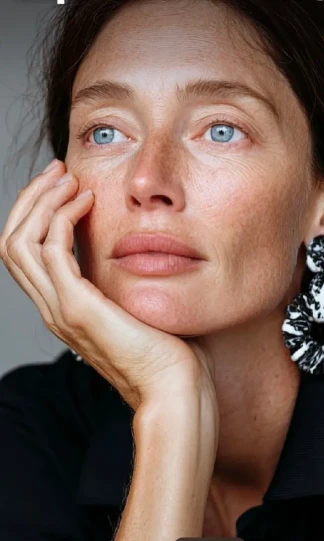
Facelift: Rejuvenation with Natural Result
The facelift is a surgical procedure designed to rejuvenate, firm, and reposition facial tissues when they exhibit sagging, drooping, or loss of definition due to aging, gravity, or the passage of time.
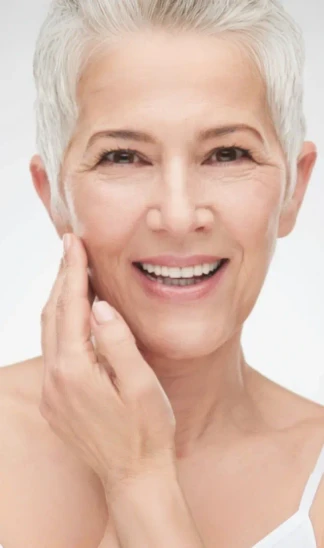
SMAS Lift: Natural Results without artificial effect
A SMAS lift is a facial plastic surgery procedure designed to reposition the deep structure of the face, not just the skin, by acting on the Superficial Musculo-Aponeurotic System (SMAS) layer.
What treatments are available for bulldog face?
What treatments are available for bulldog face?
Without surgery, the most effective are Ultherapy, thread lifts, collagen biostimulators (polylactic acid, calcium hydroxyapatite), structural hyaluronic acid and botulinum toxin in the lower third, usually combined. Radiofrequency and regenerative medicine act as a complement. In advanced cases, the reference treatment is a facelift.
What are bulldog cheeks?
They are the small bulges that appear on the sides of the chin when the fat and skin of the lower cheek descend and are retained over the jaw. Medically, they are called jowls and are one of the most characteristic signs of ageing in the lower third of the face.
How do you get rid of sagging cheeks?
First, the cause must be identified: if lack of support predominates, work is done with hyaluronic acid or biostimulators; if sagging predominates, tightening with Ultherapy or thread lifts is used. It is common to combine both approaches after a medical evaluation. If there is excess skin, the solution is surgical.
What can be done to restore firmness to the face?
Firmness depends on collagen. The treatments that stimulate it the most are Ultherapy, biostimulators and radiofrequency, always accompanied by daily photoprotection, retinoids and habits that protect the skin. The results are progressive and can be seen from the first weeks or months, depending on the technique.
At what age does the bulldog effect appear?
It usually becomes visible from the age of 40 or 45, although it can appear earlier due to genetics, significant weight loss or accumulated sun exposure.
Can the bulldog effect be removed without surgery?
Yes, in mild and moderate cases. Aesthetic medicine can redefine the oval and reduce the jowls naturally. When there is excess skin, non-surgical treatments improve the appearance, but do not achieve the result of a facelift.
How long do the results last?
It depends on the technique. As a guideline, botulinum toxin lasts between 4 and 6 months, hyaluronic acid between 6 and 18 months, and the results of Ultherapy, thread lifts and biostimulators last around one or two years. Ageing continues, so maintenance is advisable.
Each bulldog effect has a different cause
In an initial visit, we measure the quality of your skin and the condition of the deep tissues to determine if you need support, tightening or both. Without obligation and with an aesthetic doctor from the very first moment.