Medically reviewed by Dr. Javier de Benito, licence no. 8038Published on April 14, 2026
Belly after pregnancy: why it does not go away and how to recover your abdomen
After pregnancy, the female body undergoes a series of natural transformations.

The belly after pregnancy does not always go away, even when you return to your weight. It is not your fault and it is not a lack of effort. In most cases there are specific physical causes that diet alone does not correct.
Around 66% of women develop a separation of the abdominal muscles (diastasis) during pregnancy. In many of them, that separation is still there months after giving birth. The skin and the fat change too. That is why the abdomen does not return to its place on its own.
In this guide we explain, in plain language, why your abdomen changes, what can be fixed without surgery and what cannot. And we compare the two options you ask us about most: monopolar radiofrequency and abdominoplasty.
Dr. Orestes, 40+ years of experience and 2,000+ body surgeries: "In consultation, the mistake I see most is paying for skin treatments when the real problem is muscular. No machine closes a diastasis. First you have to diagnose properly; then you choose the technique."
Why does the belly appear after childbirth?
Your postpartum abdomen combines four factors. Knowing which one weighs most in your case decides the treatment.
| Cause | What happens | What really solves it |
|---|---|---|
| Diastasis recti | The muscles separate in the centre under the pressure of the uterus | Hypopressive exercises (mild) or surgery with plication (moderate to severe) |
| Skin laxity | The skin stretched and loses firmness | Radiofrequency (mild to moderate) or removing the excess with surgery (severe) |
| Localised fat | Deposits that do not go away with diet | Diet and exercise, cryolipolysis or liposuction |
| Hormonal changes | Fluid retention and an altered metabolism, especially while breastfeeding | Time, hydration and nutrition; it regulates itself |
The 3 phases of postpartum recovery
Recovery is not linear. At Instituto de Benito we follow a phased roadmap that respects the body's timing.
| Phase | When | What to prioritise | What to avoid |
|---|---|---|---|
| 1. Healing | 0–6 months | Pelvic floor, nutrition, rest, breastfeeding | Strict diets, classic sit-ups, surgery |
| 2. Optimisation | 6–12 months | Supervised hypopressive exercises, getting back into habits | Expecting definitive surgical results |
| 3. Assessment | 12+ months | Assess the diastasis and the skin; decide on treatment | Having surgery before your weight and hormones are stable |
What you can do without surgery
Before any medical treatment, two pillars shape the result of everything else.
A balanced diet
Prioritise protein, antioxidants and healthy fats. Cut down on sugar and ultra-processed food. While breastfeeding, never with aggressive diets.
Adapted postpartum exercise
Pelvic floor work and hypopressive exercises are what really help with a mild diastasis. Classic sit-ups (crunches) are contraindicated if there is a diastasis: they can make it worse.
Non-surgical aesthetic treatments
They work for mild laxity and little fat, with no diastasis and no excess skin:
- Monopolar radiofrequency: heats the skin in depth, tightens collagen and stimulates new collagen. No surgery and no time off.
- Cryolipolysis: removes localised fat with cold.
- Mesotherapy: microinjections to improve the skin.
These treatments improve; they do not rebuild. They do not close muscles or remove skin.
When surgery is needed: abdominoplasty and liposuction
Surgery comes in when there is a moderate to severe diastasis, excess skin or both, once a year has passed since childbirth. When the breast is treated in the same operation, it is called a mommy makeover. If the breast has dropped after breastfeeding, what is usually combined is a breast lift.
Abdominoplasty
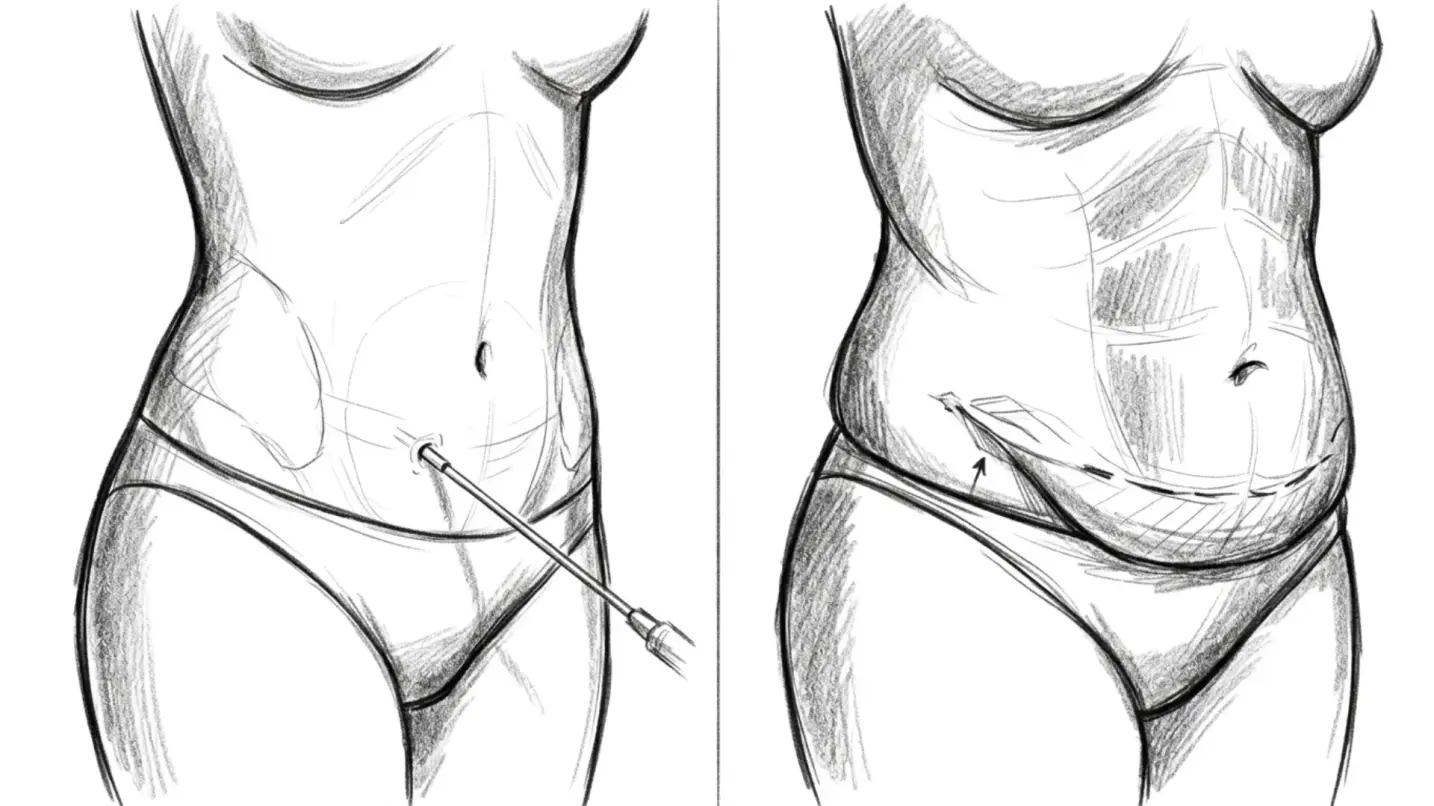
It repairs the abdominal wall by joining the separated muscles (plication) and removes the excess skin and fat. It is the only definitive solution when the muscles are separated and there is excess skin. The scar sits low, hidden under underwear.
Liposuction
It removes localised fat from the abdomen, flanks and hips. It improves the contour, but it treats neither the diastasis nor the skin. It is often combined with abdominoplasty.

Radiofrequency or abdominoplasty: which one to choose?
It is the most common question. The short answer: they do not compete, they solve different problems. This table makes it clear.
| Criterion | Monopolar radiofrequency | Abdominoplasty |
|---|---|---|
| Type | Non-invasive, outpatient | Major surgery |
| What it corrects | Mild to moderate laxity | Diastasis + excess skin + fat |
| Does it repair the diastasis? | No | Yes (muscle plication) |
| Does it remove excess skin? | No | Yes |
| Anaesthesia | No | Yes |
| Scar | None | Low, hidden under underwear |
| Sessions / procedures | About 4–6 sessions | 1 operation (approx. 2–4 h) |
| Recovery | Normal life straight away | 2–4 weeks; exercise at 6–8 weeks |
| Duration | Temporary: needs maintenance | Permanent (with a stable weight) |
| Ideal candidate | Mild laxity, with no diastasis or excess skin | Moderate to severe diastasis and/or excess skin |
Which treatment do I need for my case?
*This table is a guide. It does not replace a medical assessment.
| I only lack firmness | No | No | Hypopressive exercises + radiofrequency |
|---|---|---|---|
| Localised fat, firm skin | No | No | Diet/exercise ± cryolipolysis/liposuction |
| Separated muscles, good skin | Yes | No | Hypopressive exercises; if it does not improve, surgical assessment |
| Separated muscles + excess skin | Yes | Yes | Abdominoplasty (often + liposuction) |
Where you can have it done
We perform abdominoplasty at our two clinics. At each one you can see the price, the team that looks after you and real cases of patients from that city.
Related treatments at IdB
These are the treatment pages related to what you have just read. On each one you will find the price, the surgeon who performs it and real patient cases.
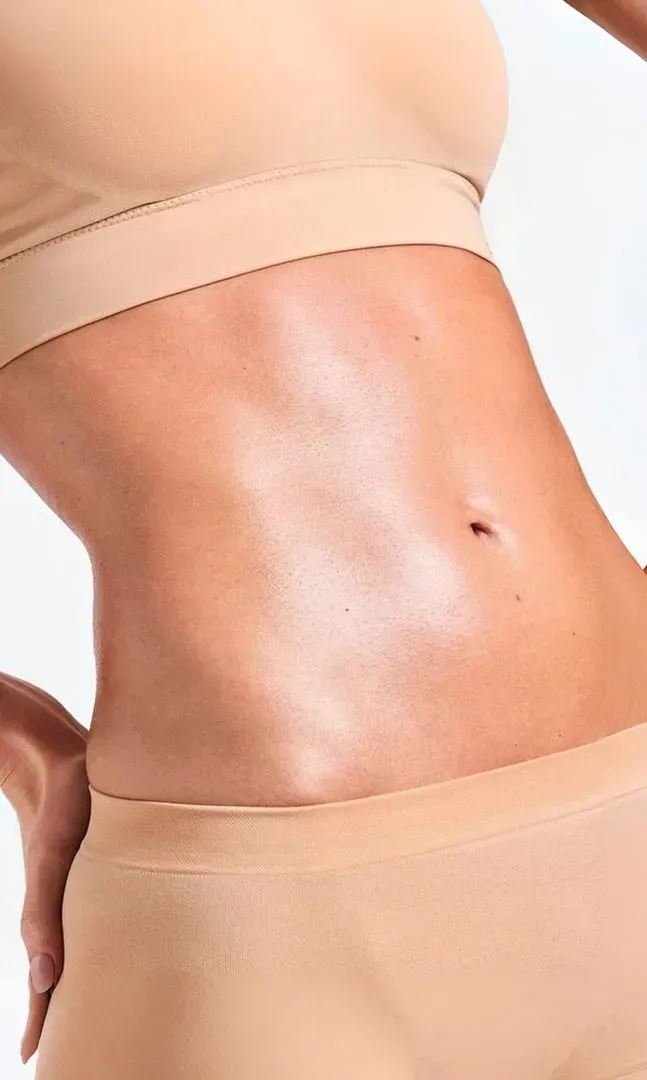
Abdominoplasty: Tummy tuck restores a flat belly
Abdominoplasty is a surgical procedure designed to improve the contour of the abdomen by removing excess skin and fat and strengthening the abdominal muscles when this area is sagging.

Mommy Makeover: Combined post-pregnancy surgery
The Mommy Makeover is a combined procedure (usually includes breast surgery, abdomen, and in some cases liposculpture).
Frequently asked questions
Does radiofrequency get rid of the belly after pregnancy?
It improves skin firmness and mild or moderate laxity. But it does not correct a muscle diastasis or remove excess skin. If the belly comes from separated muscles or excess skin, it will not be enough.
When can I have surgery on my belly after childbirth?
Wait at least 12 months. Ideally, you should have finished breastfeeding and have a stable weight, so that the body has recovered.
Does abdominoplasty correct abdominal diastasis?
Yes. It includes plication of the rectus muscles, which joins the abdominal wall back together. It is the definitive solution for a moderate to severe diastasis.
Can a diastasis be closed without surgery?
A mild diastasis can improve with supervised hypopressive and pelvic floor exercises. A moderate or severe one does not close with exercise and needs surgery.
What is the difference between liposuction and abdominoplasty?
Liposuction only removes fat. Abdominoplasty repairs the muscles and removes the excess skin. They are often combined.
Does abdominoplasty leave a scar?
Yes. A low horizontal scar, designed to stay hidden under underwear or swimwear.
How long does recovery from an abdominoplasty take?
You return to normal life in 2–4 weeks. Intense exercise, at 6–8 weeks.
Is it safe if I am planning another pregnancy?
It is best to postpone abdominoplasty until you do not want more pregnancies. A new pregnancy can separate the muscles again. Radiofrequency does not have that limitation.