Medically reviewed by Dr. Orestes Fernández specialist in body contouring, licence no. 4304469Published on 8 October 2026
Loose skin after weight loss: why it happens and how it is treated
Loose skin after weight loss appears because collagen and elastin, stretched while the weight was there, no longer retract when the volume goes down, especially if the loss was large or fast.
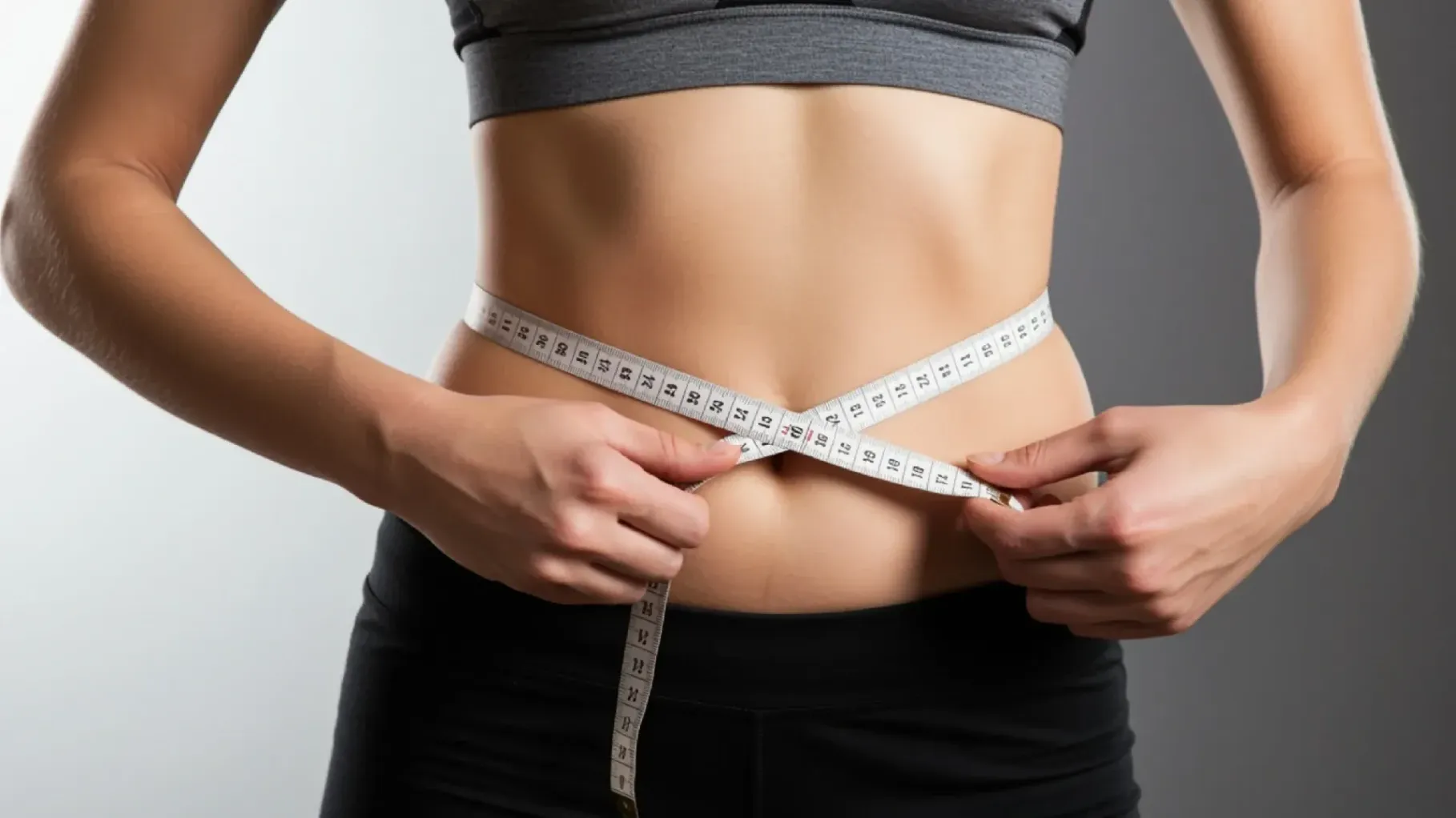
Loose skin after weight loss appears because the collagen and elastin fibers stretch while the weight is there and lose the ability to retract completely when the volume goes down. It happens more when a lot of weight is lost in a short time, with age, because of genetics and when muscle is lost along with fat.
Do you have excess skin on your abdomen after losing weight?
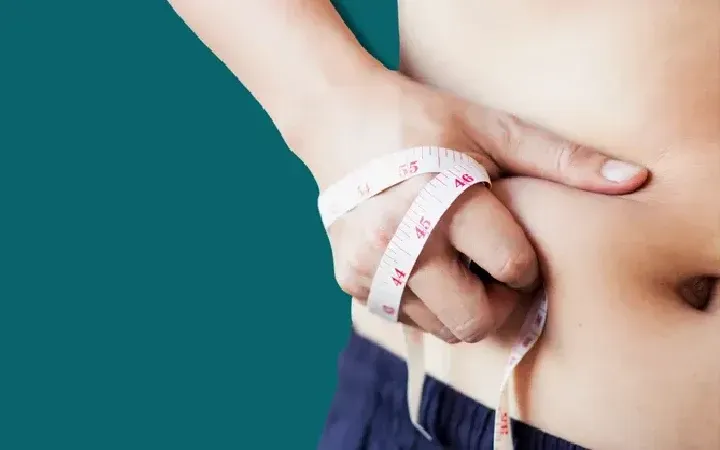
Why is skin left hanging after losing weight?
Because the skin has been stretched for a long time and has lost elasticity. With excess weight, the dermis, that is, the layer of the skin that gives it firmness, stretches to cover more volume, and the collagen and elastin fibers gradually become damaged. When the fat is lost the contents go, but the wrapping stays practically the same size.
How much the skin recovers depends on each person. What matters is how much weight was lost and how fast, how many years the excess weight was there, age, genetics, sun and smoking. Losing muscle along with fat also counts for a lot, because the skin is left without the support that kept it taut. And in women there are pregnancies, which stretch the skin of the abdomen and often separate the rectus muscles, what we call abdominal diastasis.
Is it normal to be left with hanging skin if you lose 40 kilos?
Yes, it is the normal thing. With losses of that size the skin almost never retracts completely, and it has nothing to do with having done it well or badly. We see it just the same in patients who have lost weight with diet and exercise as in patients who have had bariatric surgery or are being treated with drugs for weight loss. In these two cases the weight loss is usually faster, and the skin has less time to adapt.
The areas that show it most are the abdomen, where an apron of skin sometimes forms and hangs over the pubis, the flanks and lower back, the inner arms and thighs, the breasts and the buttocks. And it is not only an aesthetic matter. Chafing, irritation and sometimes infections appear in the folds, and it is hard to find clothes that fit well.
How do I know if my case needs surgery?
The first thing we look at is whether there is laxity or excess skin. Laxity is skin with less tone, but with none to spare. Excess is skin that hangs and that the patient can pinch with her hand to form a fold.
With mild laxity and no folds, there is room to improve without the operating room. When a small fold appears, for example below the navel, sometimes medical treatments are enough and sometimes a smaller surgery is the better option. If there is an apron or folds that do not go away, then we are talking about surgery. In the assessment we also look at the abdominal muscles, the fat that remains and the quality of the skin, because all of that changes the technique we are going to choose.
What can be done without surgery?
With mild laxity, strength training and aesthetic medicine treatments that stimulate collagen both work. Building muscle partly fills the space the fat left behind and improves the contour, especially in the arms, buttocks and legs. Eating enough protein, not losing weight all at once and not smoking all help.
In aesthetic medicine we can use body radiofrequency or biostimulators such as polylactic acid, and if there are stretch marks, treatments to fade stretch marks. We have to be honest about this. They improve the quality and firmness of the skin, but they do not remove excess skin. No cream, no device and no abdominal routine is going to remove an abdominal apron, and promising it would be misleading the patient.
Which surgery removes excess skin after weight loss?
It depends on where the excess is. On the abdomen we do an abdominoplasty or a lipoabdominoplasty, when there is excess skin all around the trunk a body lift, and on the arms, thighs or breasts, their specific lifts.
What is a lipoabdominoplasty?
It is an abdominoplasty combined with liposuction, and what the patient notices is a flat abdomen, without the fold of skin and with a more defined waist. In the abdominoplasty we remove the excess skin and fat from the lower abdomen, tighten the skin that remains and, when needed, repair the abdominal wall, that is, we stitch together the rectus muscles that had separated. If we also remove fat from the flanks and the upper abdomen with liposuction, we call it a lipoabdominoplasty. In women who have had children it is often combined with breast surgery, which is known as a mommy makeover.
The scar sits low, at the level of the underwear. It is a long scar, that has to be said from the start, and it fades over the months.
Case 1: 30 kilos lost and several pregnancies
This is a patient who lost about 30 kilos after several years of being overweight, and who had also had several pregnancies. We performed a lipoabdominoplasty with repair of the abdominal wall. She had her surgery several years ago and is very happy, with a very comfortable result. The fact that it has lasted so long has to do with her having kept her weight stable and with the fact that, as well as removing skin, we rebuilt the muscle wall that supports the abdomen.
Case 2: diastasis and excess skin after two births
You do not need to have lost a lot of weight to have excess skin. This patient is younger and, after two births, had a significant diastasis and excess skin on the abdomen, with little fat. We also performed a lipoabdominoplasty with a major repair of the whole abdominal wall, and removed the excess skin and the small amount of fat she had. Today she is very happy.
When is a body lift needed?
When there is excess skin all around the trunk and not just at the front. After very large losses, especially after bariatric surgery, the skin also drops on the flanks, the lower back and the buttocks, and an abdominoplasty falls short because it only treats the front.
The body lift, also called a lower body lift or circumferential dermolipectomy, that is, a removal of skin around the whole waistline, makes it possible to remove that excess at the front, at the sides and at the back, and at the same time lift the buttocks and the upper thighs. The scar goes around the waist at the level of the underwear. It is a more extensive surgery than an abdominoplasty, and before recommending it we carefully assess the patient's general condition. In people who have lost a lot of weight it is usually the one that gives the most complete change. On the body lift page we explain who it is indicated for and what the procedure is like.
What if there is excess skin on the arms, thighs or breasts?
Each area has its own surgery. The skin that hangs on the inner arm is corrected with an arm lift, or brachioplasty, that of the inner thigh with a thigh lift, and breasts that have emptied and dropped with a mastopexy, with or without an implant. We do not usually do everything in a single operation. We plan it in stages, a few months apart, so that each recovery is easier to get through.
When is the right time for surgery?
When the weight has been stable for around a year. If we operate while the weight is still going down, the skin becomes loose again and part of the result is lost. In bariatric surgery patients the wait from that operation is at least 12 months (to be completely sure, it depends on a visit with the doctor).
Before operating we assess general health and nutrition, because large losses sometimes leave deficiencies that should be corrected. Smoking has to stop 4 weeks beforehand, because it complicates healing.
How long does it take to get back to normal life after an abdominoplasty?
For going back to work we are talking about two or three weeks, three rather than two, always without physical effort. For physical effort it is a month or a month and a half, and it will depend on how extensive the abdominoplasty was.
With a body lift the times are somewhat longer because the operated area is larger. For the first weeks a compression garment is worn and the patient walks from the first day, slightly bent forward so as not to pull on the scar. Post-surgical massage helps with the swelling. The scar takes months to mature and fades with time.
Frequently asked questions
How can I firm up my skin after losing weight?
If the laxity is mild, with strength exercise, enough protein and treatments that stimulate collagen, such as radiofrequency or biostimulators. If the skin already hangs and forms folds, this improves its quality but does not remove it, and then the solution is surgical.
Is it normal to be left with hanging skin if I lose 40 kilos?
Yes. After losing 40 kilos the skin has been stretched for so long that it almost never retracts completely, especially on the abdomen, arms and thighs. It does not mean you lost the weight the wrong way.
Why am I left with hanging skin after losing weight?
Because collagen and elastin are damaged when they stretch while the weight is there and lose their ability to contract. Age, genetics, pregnancies, the speed at which the weight is lost and losing muscle along with fat also play a part.
How do you get rid of laxity after losing weight?
It depends on the degree. Mild laxity improves with exercise and aesthetic medicine. Excess skin on the abdomen is treated with an abdominoplasty or lipoabdominoplasty, excess around the whole trunk with a body lift, and excess on the arms or thighs with their own lifts.
Can excess skin be removed with creams?
No. A cream hydrates and improves the look of the surface, but it does not remove skin.
How long do you have to wait after losing weight to have surgery?
The advisable thing is to have a stable weight for around a year. After bariatric surgery the wait is about 12 months, it depends on your case and a consultation is needed to know whether surgery is possible.