Reviewed by Dr. Gonçal Lloveras specialist in weight lossPublished on 3 June 2026
The "Ozempic face" does not exist: what really happens to your skin when you lose weight
In recent weeks, many headlines have appeared about the effects of Ozempic on the body, especially on the skin, and about the surgeries supposedly caused by weight loss.
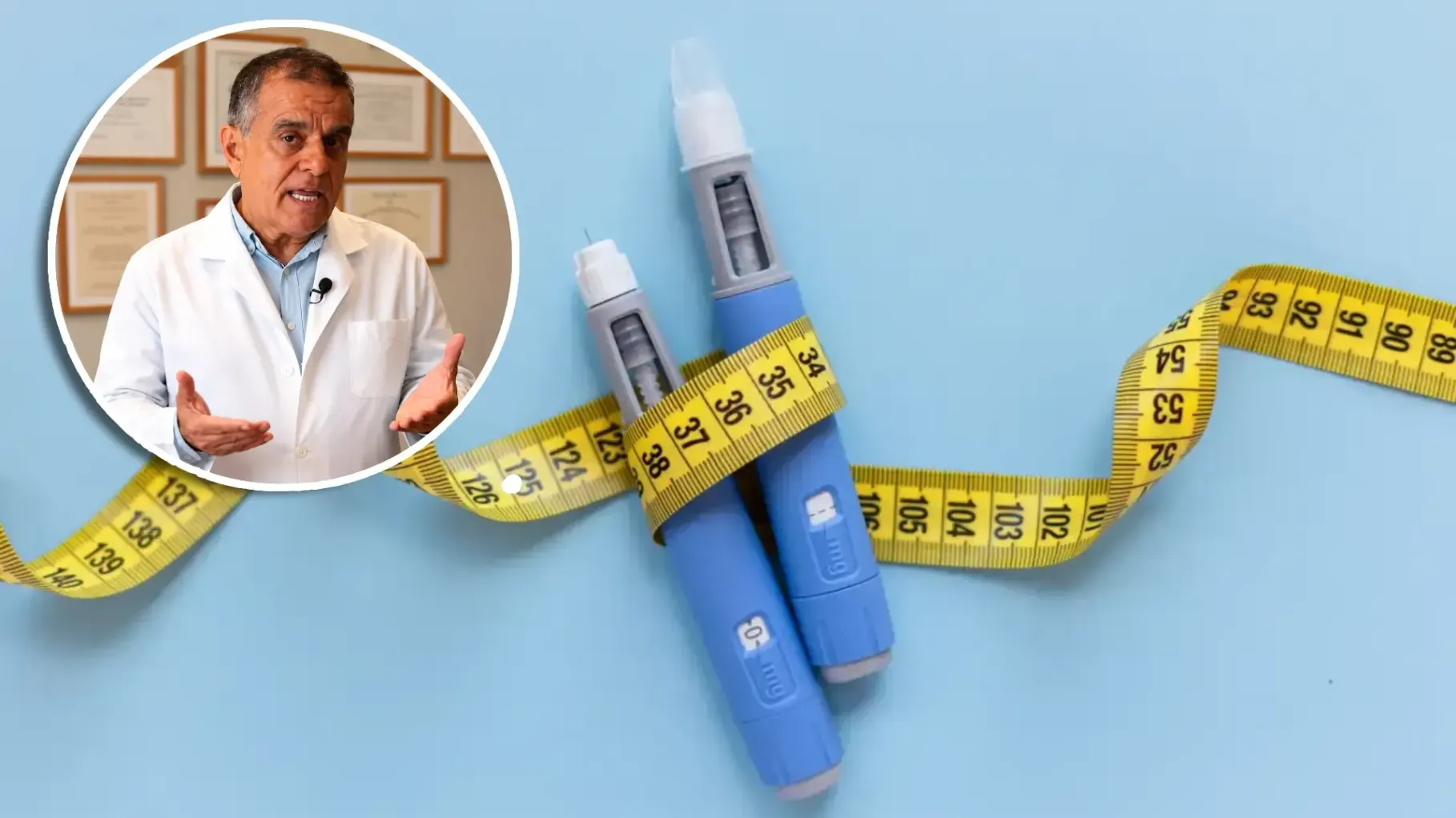
In recent weeks, many headlines have appeared about the effects of Ozempic on the body, especially on the skin, and about the surgeries supposedly caused by weight loss. Our obesity specialist wanted to set the record straight, because much of what is being said mixes myths with half-truths.
Let's start, as we should, by calling things by their name.
Lose weight safely
Ozempic is not what almost everyone thinks
Talking about "Ozempic" is talking about a specific brand, and here is the first misunderstanding: Ozempic is indicated for type 2 diabetes, not for weight loss.
For overweight and obesity, other medications are used:
- Wegovy, with the same active ingredient as Ozempic (semaglutide) but with a different indication.
- Mounjaro, which incorporates a different active ingredient (tirzepatide) and is also used in people with diabetes and in the treatment of obesity.
When the media talk about the "Ozempic face" or losing weight with Ozempic, they almost always refer to Wegovy or Mounjaro. It seems like a nuance, but it is not: behind each drug there is a specific medical indication and a reason to prescribe it. That's why the first step of any serious treatment is a professional assessment, not a trend.
The underlying myth: "losing weight with these drugs is different"
Someone is trying to convince us that weight loss with this medication is different from any other weight loss. That is not true.
Weight loss, like any other, can be managed well or poorly, with the help of these medications or without it. Weight can be lost solely with diet, with bariatric surgery, at one time with intragastric balloons or, as now, with the support of this medication. The method changes. The biological principle does not.
And here is the key that makes the difference: the important thing is not the drug, it is how it is accompanied.
When a weight loss is done taking into account the diet, knowing what carbohydrates, proteins and fats are, and seeking a real nutritional balance, there should be no strange, undesirable or different effect from any other well-done weight loss.
So, where does the sagging come from?
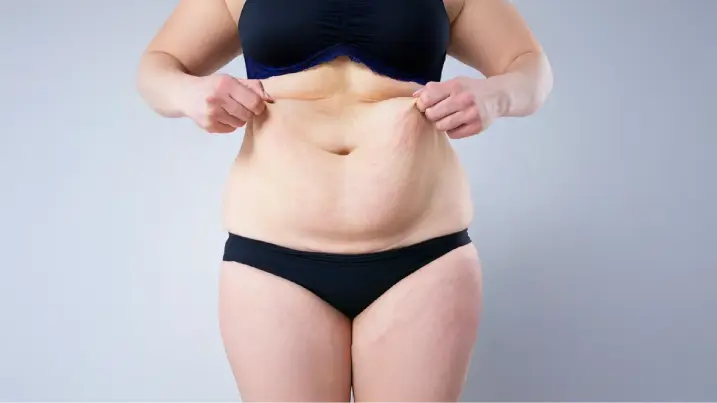
Sagging appears when weight loss is very rapid. The tissue loses volume faster than it can readjust, and the skin seems to be left "excessive". It is not a secret effect of the medication: it is what always happens when weight is lost very quickly, with any method.
Therefore, the best tool against sagging is not a subsequent treatment, but a supervised weight loss pace. Accompanying the reduction, adjusting nutrition, and allowing time for the tissues significantly reduces this problem before it appears.
And the famous "Ozempic face"? No study has shown that the skin, after losing weight with medication, is different from the skin after losing weight with any other method. What we perceive as a more emaciated face is simply the result of rapid weight loss, not an exclusive effect of these drugs.
A medical fact that almost no one mentions
If you are being treated with any of these medications and are going to undergo surgery, it is advisable to stop the medication a couple of weeks beforehand.
The reason is something called delayed gastric emptying. It's not that it will cause problems, but it could in the event of a complication during anaesthesia, and serious medicine always works with that safety margin. It's precisely the kind of detail that only appears when there is a professional behind the treatment, not just a simple prescription.
What really matters is what is not seen
Focusing the entire debate on the skin is staying on the surface, quite literally. The most relevant aspect of these treatments is what we do not see:
- The normalisation of certain metabolic processes.
- The reduction of the body's fat content.
Multiple positive effects on cardiovascular and cardiac levels.
We are dealing with one of the medications that is providing the most quality of life and years of life to our society, and this is just the beginning: we will see great evolution in the coming years. Questioning the usefulness of these drugs today is a significant step backwards.
And if there is sagging, remember what it means: that there has been weight loss. In other words, the health goal has been achieved. This sagging, in the hands of a good professional, has a solution. What cannot be reversed are the years of health gained along the way.
At Instituto de Benito we do it right
The difference between a "good" weight loss and a "bad" one is not in the brand of the drug. It is in the medical support: in the prior assessment, in the choice of the appropriate treatment for each person, in the nutritional plan that supports it, and in the follow-up that adjusts the pace to care for both your health and your skin.
Our obesity treatment is pharmacological and is supervised by specialists from start to finish. We do not prescribe a trend: we design a process.
Related treatments at IdB
These are the treatment pages related to what you have just read. On each one you will find the price, the surgeon who performs it and real patient cases.
Pharmacological treatment for weight loss
Pharmacological treatment for weight loss is a medical option indicated for people who have not managed to lose enough weight with diet and exercise alone and who need additional support under specialized medical supervision.
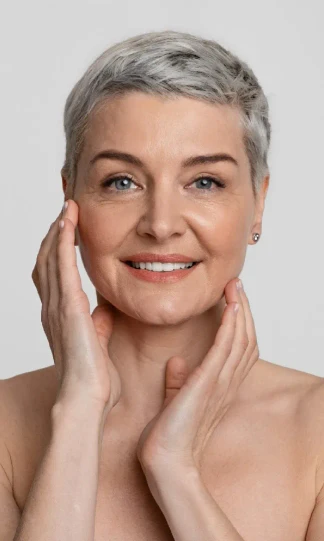
Facial rejuvenation, look 10 years younger
Facial rejuvenation encompasses a set of medical treatments aimed at improving visible signs of aging, restoring firmness, and recovering facial harmony.
Frequently Asked Questions
Is the "Ozempic face" real?
There is no scientific evidence to show that the so-called "Ozempic face" is a specific effect of semaglutide or other weight loss medications. What is usually observed is a loss of facial volume associated with rapid weight loss, something that can occur with any weight loss method.
Does Ozempic cause skin sagging?
Not directly. Sagging appears when the body loses volume faster than the skin can adapt. This can occur after rapid weight loss, regardless of whether it is achieved through diet, bariatric surgery, or medication.
Why is there so much talk about the "Ozempic face"?
Because the term has become popular in media and social networks. However, it is often used incorrectly to refer to facial changes resulting from rapid weight loss, not as an inherent effect of the medication.
Is Ozempic indicated for weight loss?
No. Ozempic is approved for the treatment of type 2 diabetes. For the treatment of overweight and obesity, there are other specific medications, such as Wegovy (semaglutide) or Mounjaro (tirzepatide), depending on the medical assessment of each patient.
What is the difference between Ozempic and Wegovy?
Both contain semaglutide, but they have different indications. Ozempic is used for type 2 diabetes, while Wegovy is specifically indicated for the treatment of overweight and obesity.
Are Mounjaro and Ozempic the same?
No. Mounjaro contains tirzepatide, an active ingredient different from Ozempic and Wegovy. Both can be used in certain cases for the treatment of obesity, but they act differently and require medical supervision.
Can sagging be avoided when losing weight?
Although it cannot always be completely avoided, the risk decreases when weight loss is achieved progressively, with adequate nutrition and professional supervision. A controlled pace allows tissues to adapt better.
Does the skin change if I lose weight with medication?
It has not been proven that the skin responds differently when weight loss is achieved through medication compared to other methods. What influences is the amount and speed of the weight loss.
Is it bad to lose weight quickly with Wegovy or Mounjaro?
A very rapid weight loss can lead to sagging and other effects associated with sudden changes in body composition. Therefore, it is important that the treatment is supervised by specialists.
What benefits do obesity medications have besides weight loss?
In addition to promoting weight reduction, they help improve various metabolic processes, decrease body fat, and provide cardiovascular benefits that can enhance quality and life expectancy.
Should I stop Ozempic or Mounjaro before an operation?
If you are going to undergo surgery, it is important to inform your medical team. These medications can slow gastric emptying and, in some cases, it is recommended to discontinue them beforehand following the specialist's instructions.
Is the key to weight loss in the medication?
No. Specialists agree that the success of the treatment depends on a comprehensive approach that includes medical assessment, nutritional education, monitoring, and adaptation of the treatment to each patient. The medication is only part of the process.
Does sagging mean the treatment has gone wrong?
Not necessarily. Sagging is often a consequence of having lost weight. From a health perspective, the main goal is to reduce excess fat and improve the risks associated with obesity. Sagging can be addressed later with different treatments.
Who should assess if I am a candidate for Wegovy or Mounjaro?
Always a professional specialised in obesity or endocrinology. The choice of treatment depends on multiple medical factors and should not be based on trends or generic internet recommendations.
Book an appointment with our weight loss specialist
If you are considering losing weight with this medication and want to do it properly, with medical criteria and without surprises, book your assessment with our team.