Medically reviewed by Dr. Cristina Cobaleda specialist in aesthetic medicine, licence no. 51612Published on 3 November 2026
Intense pulsed light: what is it for and how many sessions do you need?
Intense pulsed light improves skin quality: it lightens dark spots, reduces redness and small visible vessels and evens out skin tone. You usually need 3 to 5 sessions a year, depending on your skin and what you want to treat.
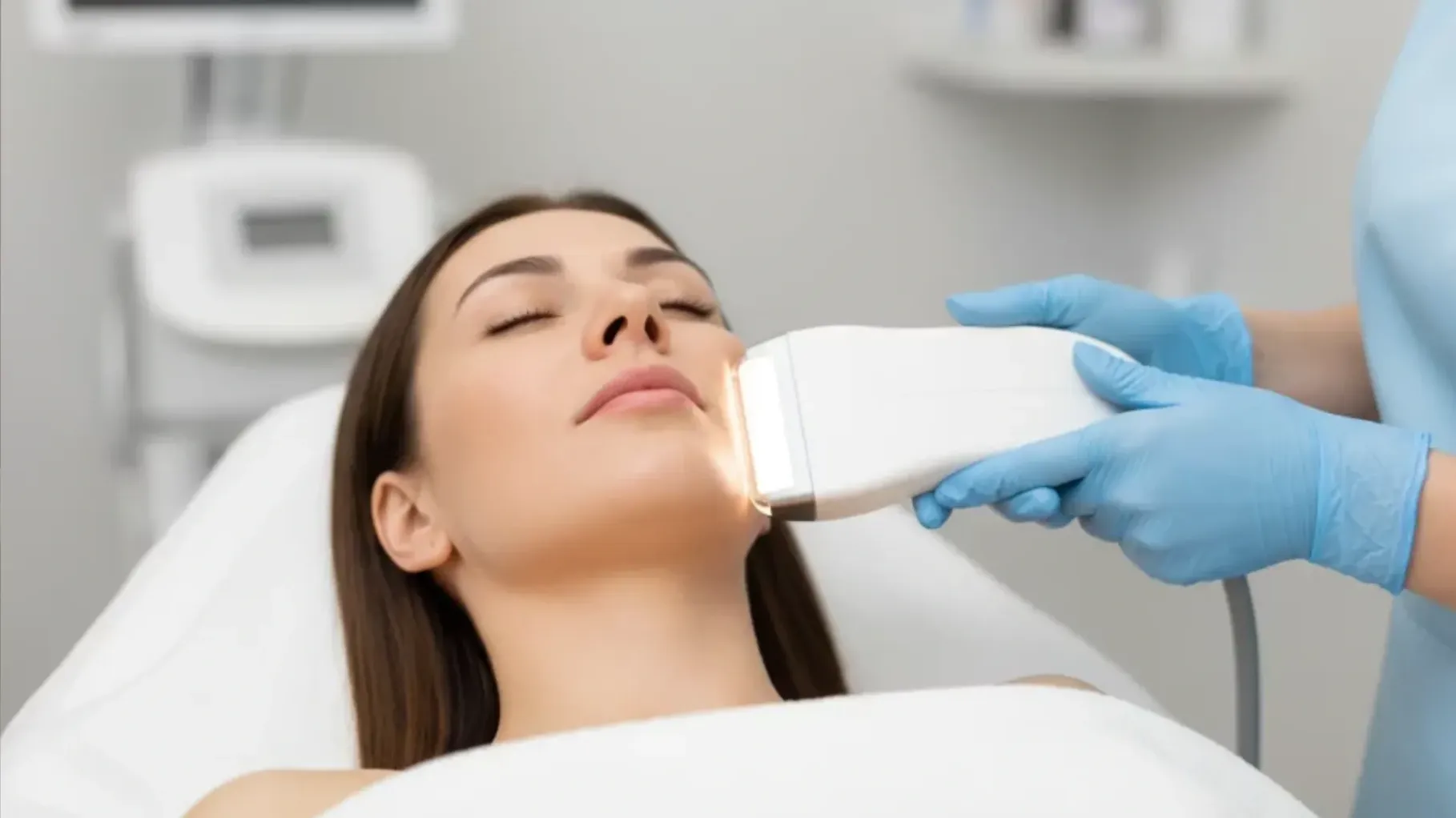
Intense pulsed light, or IPL, is an aesthetic medicine treatment that applies pulses of broad-spectrum light to the skin. That light is absorbed by the pigment in dark spots and by the haemoglobin in blood vessels, which is why it treats spots, redness and uneven tone at the same time, while also stimulating collagen. No needles and no downtime.
Improve your skin with pulsed light

What is intense pulsed light used for?
“It is a treatment we use to improve the quality of your skin,” explains Dr. Cristina Cobaleda. We mainly use it for:
- Sun spots, lentigines and freckles that have darkened.
- Redness, couperose and rosacea.
- Telangiectasias, the small dilated vessels you see on the cheeks and nose.
- Uneven tone, including the marks left by acne.
- Dull skin, with visible pores or uneven texture, because it stimulates collagen.
At the clinic we perform it as pulsed light photorejuvenation, with the settings adjusted to each skin and to what needs treating.
How many intense pulsed light sessions do you need?
Usually 3 to 5 sessions a year, spaced several weeks apart so the skin can recover between them. “Depending on each patient's characteristics, we will design a personalised treatment,” Dr. Cobaleda adds.
Three things matter: how many spots or how much redness there is, how deep they are and your skin type. Many patients repeat a course every year, after the summer, to keep the result.
Who is the ideal patient?
Almost everyone, but especially people with little spots that appeared after the summer or uneven tone from acne scars. It also works very well on skin with redness or couperose.
It is not the right time if your skin is tanned or you have been in the sun in the last few weeks, and on very dark skin we first have to assess whether it is safe. That is why we always start with a medical assessment.

What is a session like?
It lasts 20 to 30 minutes. We protect your eyes, apply a cold gel and pass the handpiece over the area. You feel heat and small pinpricks that go away straight away; no anaesthetic is needed.
Afterwards the skin may be slightly red for a few hours. Spots sometimes darken for a few days before they lighten: this is normal and part of the process.
What should you avoid after intense pulsed light?
- Do not go in direct sun for at least 2 weeks.
- Do not forget your moisturiser and a high-protection sunscreen, every day.
- Do not use irritating products, such as exfoliants or retinoids, for the first few days.
- Do not scratch or rub the spots that darken: they flake off on their own.
You can go back to your normal life straight away.
Frequently asked questions about intense pulsed light
Is IPL the same as intense pulsed light?
Yes. IPL stands for intense pulsed light. It is the same technology, and when it is used to improve the quality of facial skin it is usually called photorejuvenation.
How much does an intense pulsed light session cost?
At Instituto de Benito, from €290 per session (VAT included). You can see the exact price by area and number of sessions in pulsed light photorejuvenation.
How long does intense pulsed light take to work?
The skin looks brighter from the first session. Dark spots take a few weeks to lighten and the final result can be seen 1 to 2 months after completing the sessions.
Which is better, laser or intense pulsed light?
It depends on what needs treating. Both technologies use light to heat the pigment or the vessel, but they work differently:
- Laser: emits light of a single wavelength. It is more selective and precise for a specific or deeper lesion, and sometimes needs fewer sessions.
- Intense pulsed light: emits pulses of several wavelengths, and filters are used to choose the right one. It is more versatile: it treats spots, redness and uneven tone in the same session.
To improve overall skin quality, intense pulsed light is usually the best option. In both cases you need a trained doctor, settings adjusted to your skin type and eye protection.
Does intense pulsed light remove dark spots for good?
It lightens sun spots a great deal, but the sun brings them back. With daily sunscreen and one maintenance session a year, the result lasts. If you want to know what type of spot you have, we explain it in why dark spots appear on the skin.