Medically reviewed by Dr. Orestes Fernández specialist in body contouring, licence no. 4304469Published on 5 November 2026
Should liposuction remove all the fat?
No. Liposuction should always leave a layer of fat under the skin. Fat has its own functions and keeps the body's contours in harmony; if only skin stuck to muscle is left, you get irregularities and dents. Liposuction shapes the silhouette by removing localised fat, and it is not a way to lose weight.
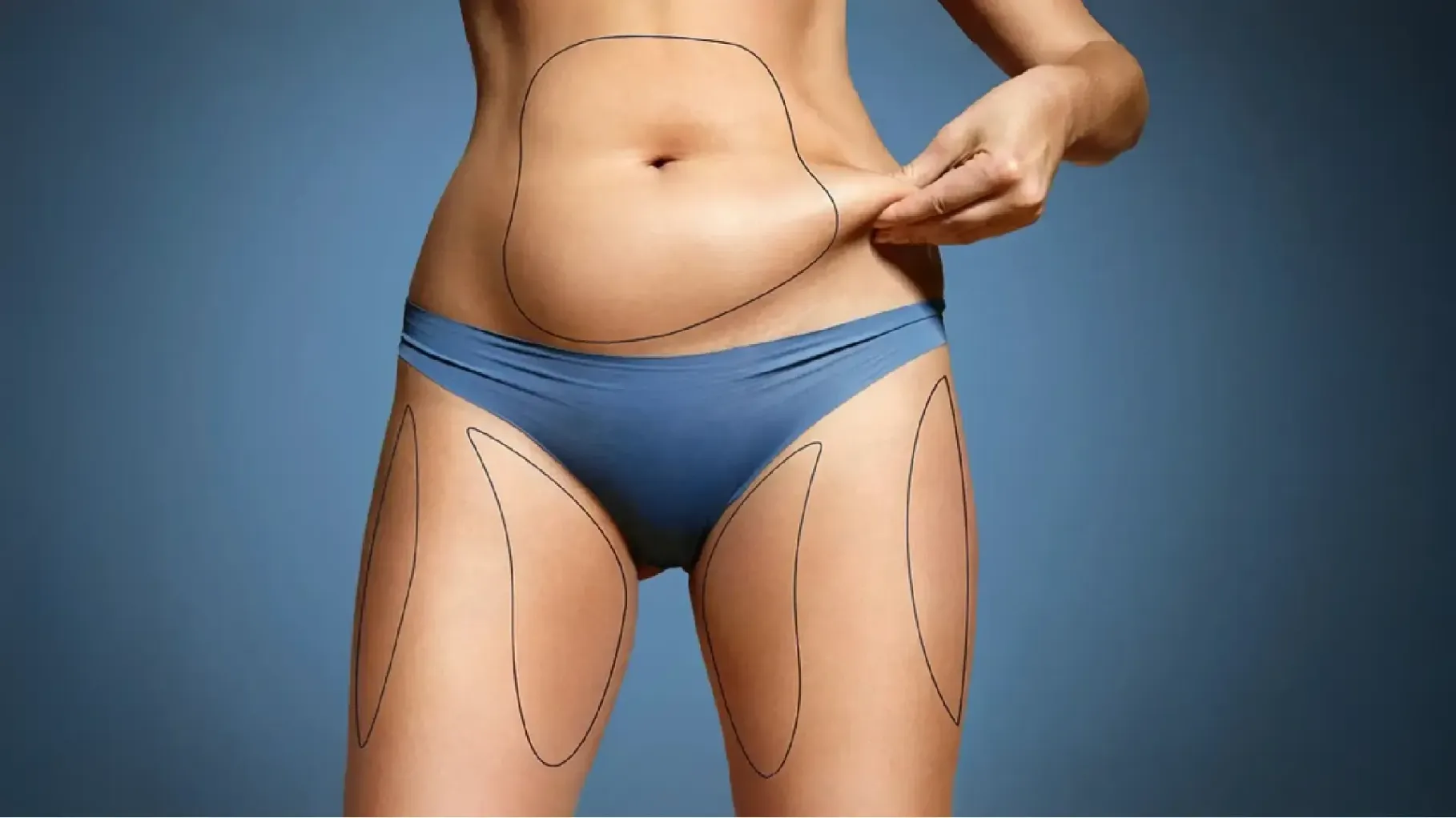
It is something we make very clear at the first consultation. Liposuction is not a weight-loss or obesity treatment: it is surgery to shape the body's contours by removing localised fat deposits, always keeping an even layer under the skin.
Liposuction with medical judgement

What does the surgeon say about the fat that should be left?
"You always have to leave fat, and that needs to be very clear", explains Dr. Orestes Fernández, plastic surgeon specialising in body contouring at Instituto de Benito. "Apart from having its own specific functions, fat also helps keep the harmony we want in our body".
Expecting only the skin to be left against the muscle is a mistake, because the aesthetic result is poor: irregularities and dents appear, and the skin attaches to the deeper layers.
Why should some fat be left under the skin?
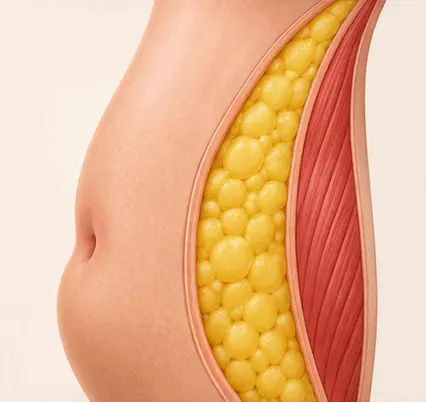
Because that layer of fat is part of what makes a body look natural. It protects the tissues, cushions them and lets the skin glide over the muscle instead of becoming fixed to it.
When we plan a liposuction, we think about what we are going to leave as much as what we are going to remove. We work mainly on the deeper fat and preserve the superficial layer, the one just under the skin that gives it a smooth surface. We explain the different techniques in types of liposuction.
What happens if too much fat is removed in liposuction?
The most common problem is aesthetic and often hard to correct. If an area is emptied too much, the skin loses its support and ripples, small dents and folds appear. In some cases the skin heals stuck to the muscle and the treated area looks hard and unnatural.
The proportion with the rest of the body is also lost. A tummy with no fat at all next to hips or a back that have not been treated looks unbalanced. That is why patients sometimes ask us to remove more than is advisable, and our job is to explain honestly where the limit is.
There is also a safety limit. Removing a very large volume in a single operation increases the risk of fluid imbalance and circulation problems. We set that limit for each patient at the prior assessment.

Does liposuction help you lose weight?
No, and it is worth being clear about this before surgery. Liposuction improves your shape, not the number on the scales. We see the best results in patients with a stable weight close to their ideal, who have fat deposits that do not respond to diet or exercise.
If you are significantly overweight, we first recommend losing weight. That way we only treat the deposits that really need it and the result is more harmonious. If your concern is your tummy, we cover it in how to lose belly fat.
How does the surgeon decide how much fat to leave?
We decide it at the consultation, after examining the patient. We assess the thickness of the fat in each area, the quality and elasticity of the skin, the proportion with the rest of the body and what she hopes to achieve.
The double chin, the arms and the inner thighs have thinner skin and tolerate aggressive removal less well than the abdomen or the flanks. That is why there is no fixed amount for everyone: in each case we aim to remove just enough to define the contour and leave enough of a layer for the result to look natural over the years.
If you are considering liposuction, at the assessment we explain how much it makes sense to remove in your case and what result you can expect, at our clinics in Barcelona and Madrid.
Frequently asked questions about fat in liposuction
How many kilos of fat are removed in liposuction?
It depends on the area and on each patient, and we set the volume at the assessment. As a guide, a litre of fat weighs about 0.9 kg, but a litre removed does not mean a kilo less on the scales, because part of what is extracted is the fluid we infiltrate during surgery. What you notice is the change in contour. You will find the equivalences in does the fat from liposuction come back?.
Which fat is the hardest to get rid of?
Visceral fat, the fat inside the abdomen around the organs, cannot be treated with liposuction: it only goes down with weight loss and lifestyle habits. Liposuction works on subcutaneous fat, and within it the areas that resist diet the most are usually the flanks, the lower abdomen, the saddlebags and the inner thighs and knees.
Where does the fat go after liposuction?
It is suctioned through fine cannulas and removed from the body. In some cases it can be purified and reinjected into another area, which is known as lipofilling or fat grafting; at Instituto de Benito we do this in buttock fat transfer.
The fat cells that are removed do not grow back in that area. If you gain weight afterwards, the remaining ones grow, both in the treated area and elsewhere; that is why keeping your weight stable is part of the result.
What is the maximum amount of fat that can be removed in liposuction?
There is no single figure for every patient. The safety limit per operation depends on the person, their state of health and the areas being treated, and we set it at the prior assessment.
If more volume needs treating, we plan it in several stages spread over time, which protects the patient's health and makes recovery better. Going over that limit in a single operation is not worth it: the risks increase and the aesthetic result is usually worse.