Medically reviewed by Dr. Orestes Fernández specialist in body contouring, licence no. 4304469Published on 26 October 2026
Renuvion: what it is and when we use it in plastic surgery
Renuvion is a minimally invasive surgical procedure that tightens and retracts mild to moderately lax skin. It combines radiofrequency and helium plasma applied under the skin. At Instituto de Benito we use it in the operating room, always together with liposuction, so that the skin adapts better to the new contour.
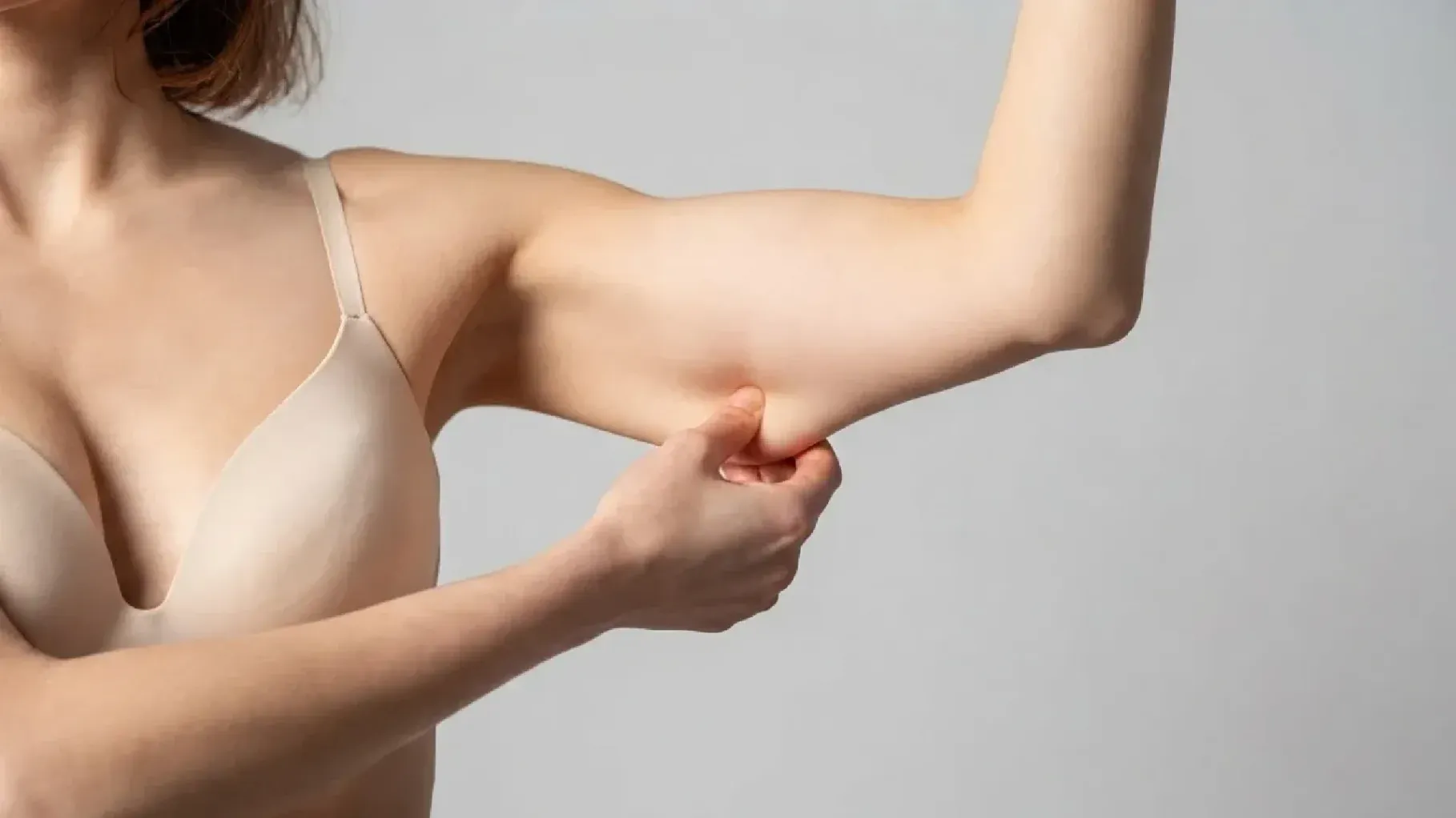
Renuvion combines radiofrequency energy with helium plasma and is applied beneath the skin with a thin cannula. The heat contracts the tissue straight away and, over the following months, stimulates new collagen.
At Instituto de Benito it is used by our body surgeons, always as part of liposuction and never on its own.
What Renuvion is and how it works
It works in three steps:
- Combined energy. It joins radiofrequency and ionised helium gas, which form a plasma beam.
- Under the skin. A thin cannula is inserted through an incision of a few millimetres. In our case, the same liposuction incisions are used.
- Contraction. The plasma heats the fibrous septa that hold the skin in a controlled way, while the helium protects the surface. The tissue contracts straight away and, in the following months, produces new collagen.
At Instituto de Benito it is always done in the same operation as liposuction: first the fat is removed and then Renuvion is applied where the skin needs to retract. It is not an in-clinic treatment: it is done in the operating room, under the liposuction anaesthesia (local with sedation or general, depending on the area and the case).
What the evidence says
One study followed patients treated on the neck and double chin: at 180 days, 82.5% had improved the laxity in that area. Its results led the FDA, in July 2022, to extend the device's clearance to improving lax skin on the neck and submental area. The study is published in PubMed Central.
For other areas, such as the abdomen or the arms, it is mainly used together with liposuction, and published data are scarcer.
Areas where we use it
We combine it with liposuction, including HD liposuction with VASER, in the areas where laxity shows most once the fat has been removed:
- Abdomen and flanks
- Arms
- Thighs
- Back
- Buttocks
- Neck and double chin
It is decided at the assessment, depending on how much fat needs to be removed and the quality of the skin. Not every liposuction needs it.
In this video, Dr. José Morales explains what we use these technologies for in high-definition liposuction.
Recovery
It is an outpatient procedure: you go home the same day. Recovery is that of the liposuction, with a compression garment for about 2 to 4 weeks, and most patients return to their usual activity within a few days. There is swelling in the first days and there may be some bruising.
The skin is not fully tightened on day one. The effect increases as new collagen forms, over several months.

When it is not enough
Renuvion helps when laxity is mild or moderate and the skin can still retract. If retraction is good, it can sometimes shorten a scar or even avoid cutting skin. When there really is excess skin, for example after major weight loss, no energy device can remove it: it has to be removed with surgery.
- Arm lift, from €7,500, for skin that hangs on the inner arm.
- Tummy tuck, from €7,000, when there is excess skin on the abdomen or the muscles are separated.
More on this in loose skin after weight loss.
How much it costs
It depends on the case. To begin with, it is included in the starting price of liposuction, from €4,500. The final quote depends on the areas treated, and we give it to you as a fixed price after the assessment.
Who assesses you
You are seen by one of our body surgeons, the same one who will operate on you, such as Dr. Orestes Fernández. They look at how much excess fat and skin there is, and from there tell you whether liposuction is enough, whether it is worth adding Renuvion or whether you need a different operation. We see patients in Barcelona and Madrid.
Frequently asked questions about Renuvion
What is Renuvion and what is it for?
It is a minimally invasive procedure that combines radiofrequency and helium plasma under the skin to tighten mild to moderate laxity. It is mainly used so that the skin retracts after fat has been removed with liposuction.
Do you offer Renuvion at Instituto de Benito?
Yes. It is used by our body surgeons, in the operating room and always together with liposuction.
Can Renuvion be done without liposuction?
At Instituto de Benito, no: it is always part of a liposuction, so that the skin retracts over the new contour.
Are Renuvion and J-Plasma the same thing?
No. They are made by the same company, Apyx Medical, and share the same helium plasma technology, but they are different devices for different uses: J-Plasma is used in hospital surgery, to cut and coagulate tissue precisely, and Renuvion in cosmetic surgery, to retract the skin.
How much does it cost to add Renuvion to liposuction?
It depends on the case. To begin with, it is included in the starting price of liposuction, from €4,500, and the final quote is set at the assessment.
How long does the effect of Renuvion last?
The retraction is long-lasting, because the tissue contracts and new collagen forms. What does not stop is ageing: over the years the skin keeps losing firmness, and a big change in weight also affects the result.
What side effects does it have?
The usual ones are those of liposuction: swelling, bruising and areas with altered sensation for a few weeks. Less often a seroma (fluid build-up) or a burn may appear. That is why it is done in the operating room and applied by a surgeon.
And if there is a lot of excess skin?
Then Renuvion is not enough. The solution is to remove it with surgery: an arm lift or a tummy tuck.