Medically reviewed by Dr. Javier de Benito, licence no. 8038Published on 12 November 2026
Mini facelift: what it is and how it differs from a facelift
A mini facelift is a facelift. The name suggests a small operation, but the technique is the same: the tissues that have dropped are repositioned and the excess skin is removed. What changes from one patient to another is how much needs treating, and that depends on how much laxity each face has.
If you are looking for a mini facelift, you probably want a natural change and a short recovery. Here we explain what lies behind the name, with the view of Dr. Javier de Benito, and what really decides the type of operation.
Book your facelift assessment
What is a mini facelift?
A mini facelift is a facelift. It is not a different technique. In both cases the tissues under the skin, the ones that drop with age and pull the skin down, are repositioned, and then the skin is redraped and the excess removed.
The word «mini» does not describe a specific operation. It describes what the patient is hoping for: something small, quick and risk-free. That is why two clinics can call very different operations a mini facelift.
Why do people talk about a mini facelift?
Dr. Javier de Benito puts it like this: many patients come in asking «don't give me a facelift, just do a little», and the word mini facelift helps not to scare them. «Deep down, it is a facelift», he says. «It is a sales word».
The same happens with other operations. A «mini lipo» does not tell you which area is treated, how long it takes or what is done. What matters is not the name, but what your face needs.
What changes from one facelift to another?
According to Dr. de Benito, the difference is the extent: it will take fewer or more hours depending on how much laxity there is. At the consultation we assess:
- How much laxity there is and where: jawline, cheeks, neck or brows.
- The quality of the skin and tissues.
- Which technique that area needs. There is no single facelift, and each case calls for its own.
That is why at Instituto de Benito we talk about types of facelift, not sizes: SMAS facelift, deep plane facelift, mid-face lift, neck lift or brow lift.
Mini facelift: what is advertised and what really decides
Some promises come up again and again on mini facelift websites. This is what lies behind each one:
| Aspect | What is often advertised | What really decides |
|---|---|---|
| Technique | A different, lighter operation | It is the same: tissues are repositioned and excess skin removed |
| Area | Only one part of the face | Whichever has laxity: it can be one or several |
| Scar | Minimal | It depends on the area and the skin removed; it sits around the ear and the hairline |
| Recovery | A few days | Back to social life after 10-15 days, like any facelift |
| Duration | Between 1 and 3 years | About 10 years; it does not depend on the technique |
| Price | Cheaper than a facelift | That of the type of facelift you need |
Which areas does it treat and where is the scar?
The same as a facelift, depending on where the laxity is:
- Cheeks and cheekbones that have dropped.
- Jawline and facial contour.
- Double chin and neck, including vertical bands.
- Drooping brows and forehead.
The incisions are hidden around the ear and along the hairline. Their length depends on the area and on how much skin needs removing, not on what the operation is called.
Who is a good candidate and who is not?
A good candidate has laxity in the face or neck, has lost definition along the jawline and wants a natural result without changing their features. Usually from the age of 40 or 45. Good health and realistic expectations are needed.
Surgery is not advisable, or you need to get it under control first, if you have:
- Uncontrolled high blood pressure, diabetes or heart disease.
- Clotting problems or anticoagulants that have not been adjusted.
- Heavy smoking: it reduces blood flow to the skin and makes healing worse.
- Active infections, or uncontrolled autoimmune diseases.
- A tendency to thick scars or keloids.
- Large weight changes.
- Unrealistic expectations about what surgery can do.
The full list is on the page about facelift contraindications.
What should you think about before the consultation?
Two questions help the surgeon know whether treating one area is enough or more is needed:
- Which area worries you most: your cheeks, your double chin or your neck?
- Have you had any aesthetic treatment before, such as thread lifts or radiofrequency? If so, which one, when, and what result it gave you.
With that and the examination, the surgeon who will operate on you tells you which type of facelift you need. Whether you call it a mini facelift or not does not matter: what matters is that it treats what bothers you.

How long does a mini facelift last?
The same as a facelift: about 10 years, depending on each patient's anatomy. How long it lasts does not depend on the technique, but on the quality of the tissues, genetics and how each person ages. After 5 years a little maintenance is usually advisable.
What is recovery like?
It is that of any facelift. It varies with what has been treated, and your surgeon gives you the guidelines for your case:
- First 24 hours: at the clinic, with cold compresses. Then you continue with cold at home.
- Day six or seven: the stitches around the ear are removed.
- 10 to 15 days: you get back to your social life and light activity.
- 4 to 6 weeks: intense exercise.
- Sun: avoid it on the scar for several months or use high protection.
What are the risks?
The same as a facelift. The common ones are temporary and part of recovery:
- Swelling and bruising on the face and neck.
- Tightness, mild discomfort and itching while it heals.
- Temporary loss of sensation.
- Slight asymmetries from the swelling, which go away.
There are rare but known complications, such as injury to branches of the facial nerve, bleeding or healing problems, especially in smokers. That is why surgery takes place in an accredited operating theatre, with an anaesthetist, and with follow-up afterwards. If after surgery you have pain that does not ease, bleeding, a fever above 38 °C or an area that suddenly swells, call the clinic.
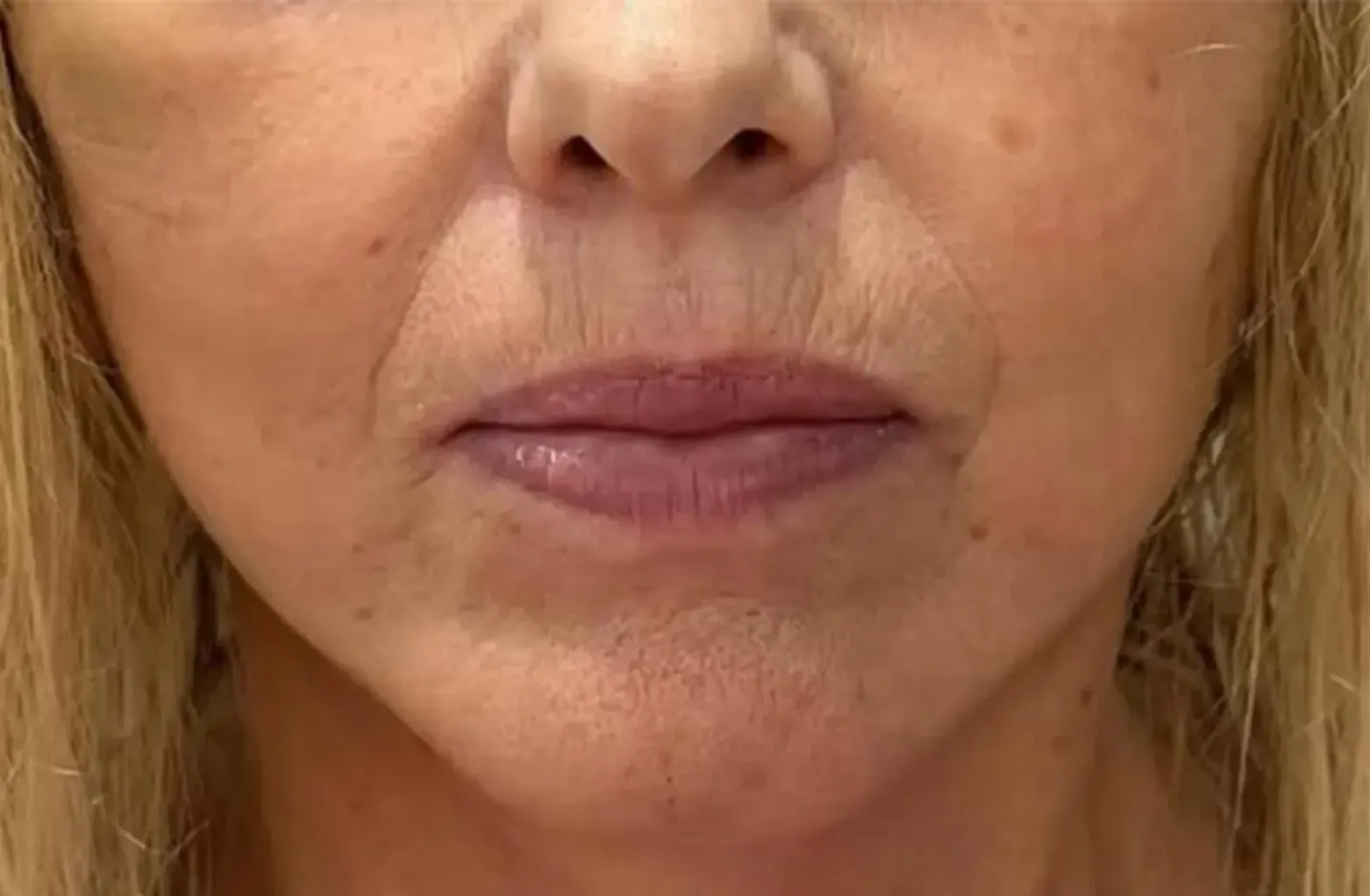
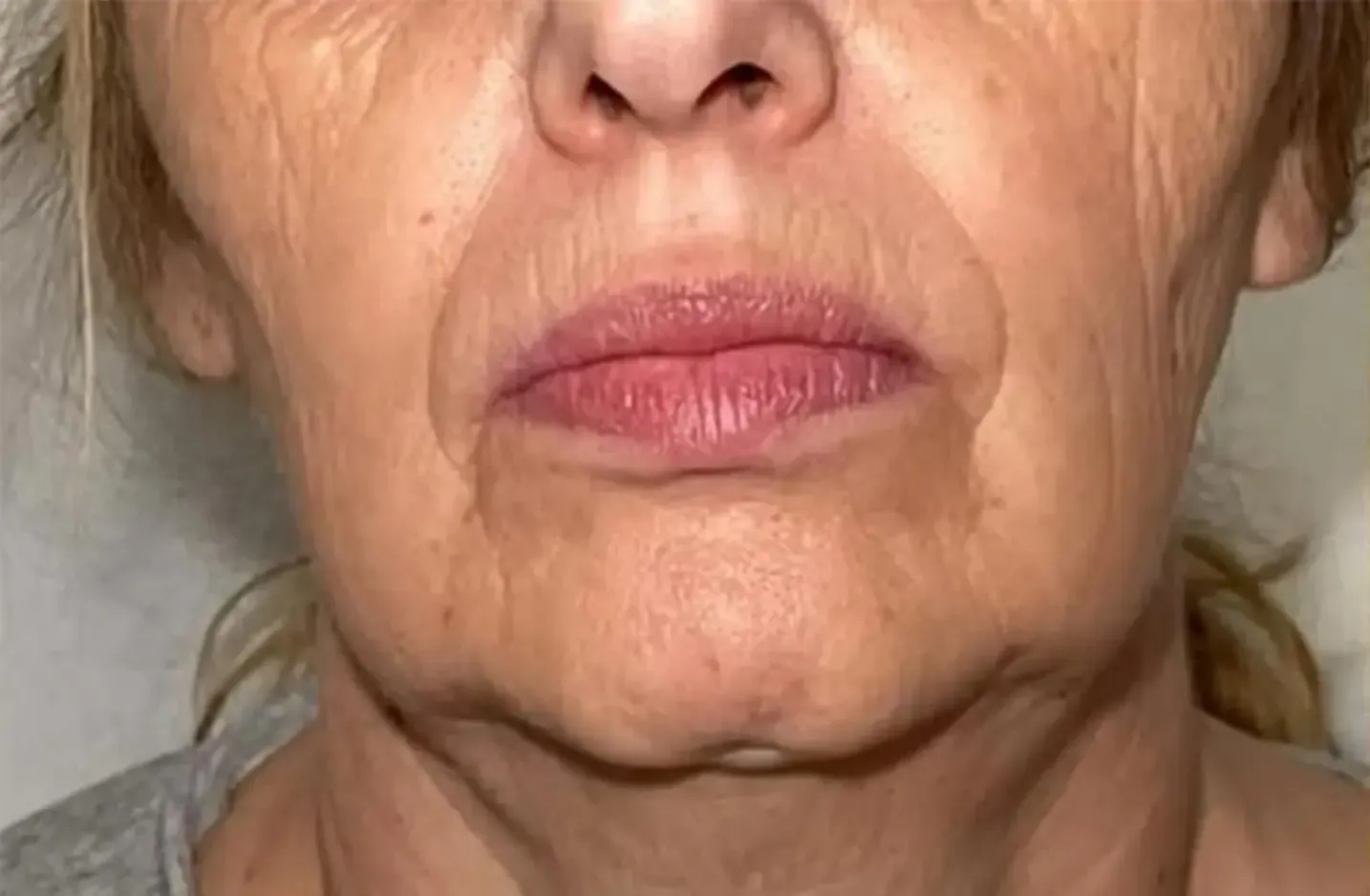
Real case: Emma, 58, Barcelona
Facelift. Before and after photos of the surgery.
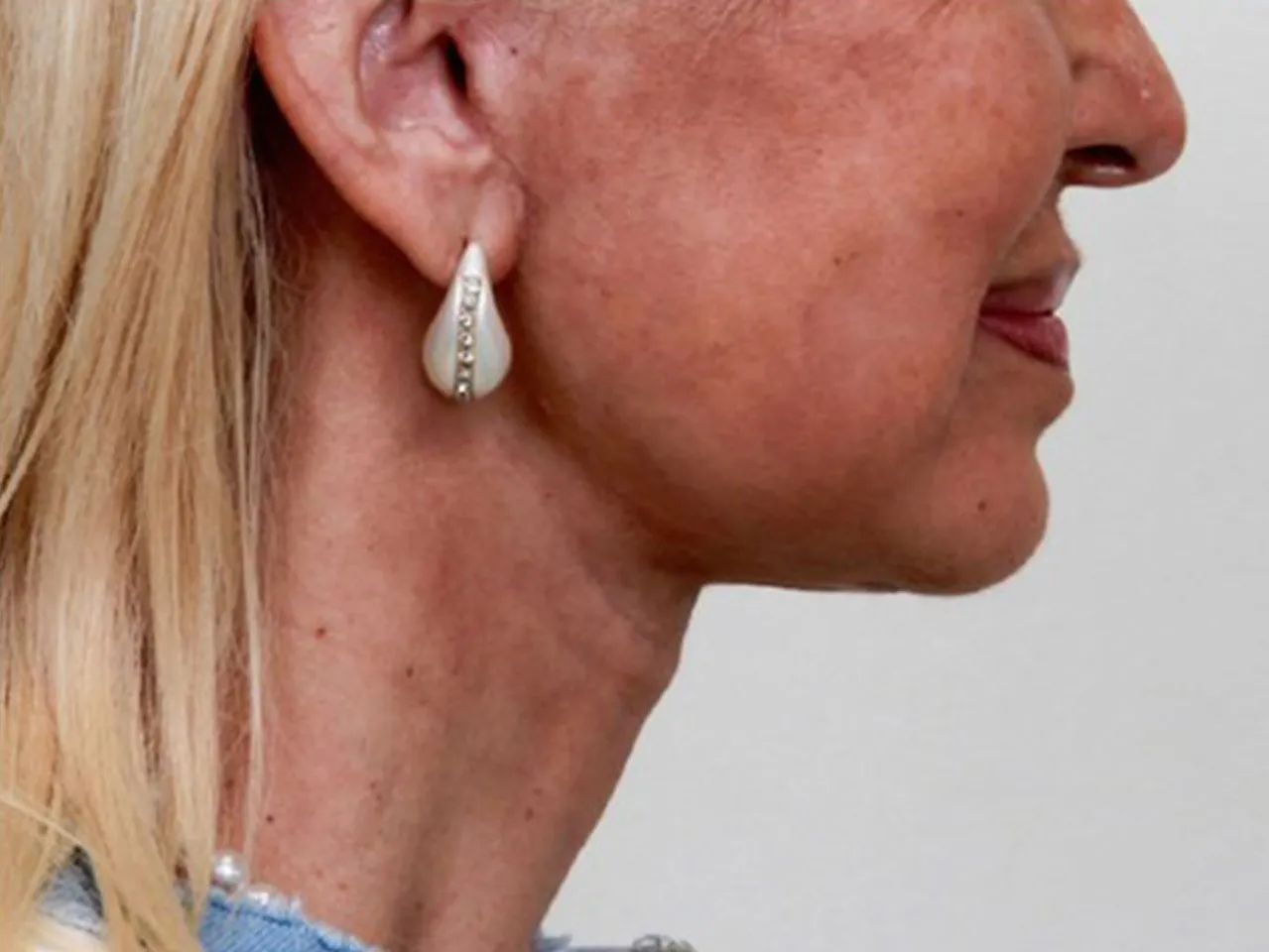
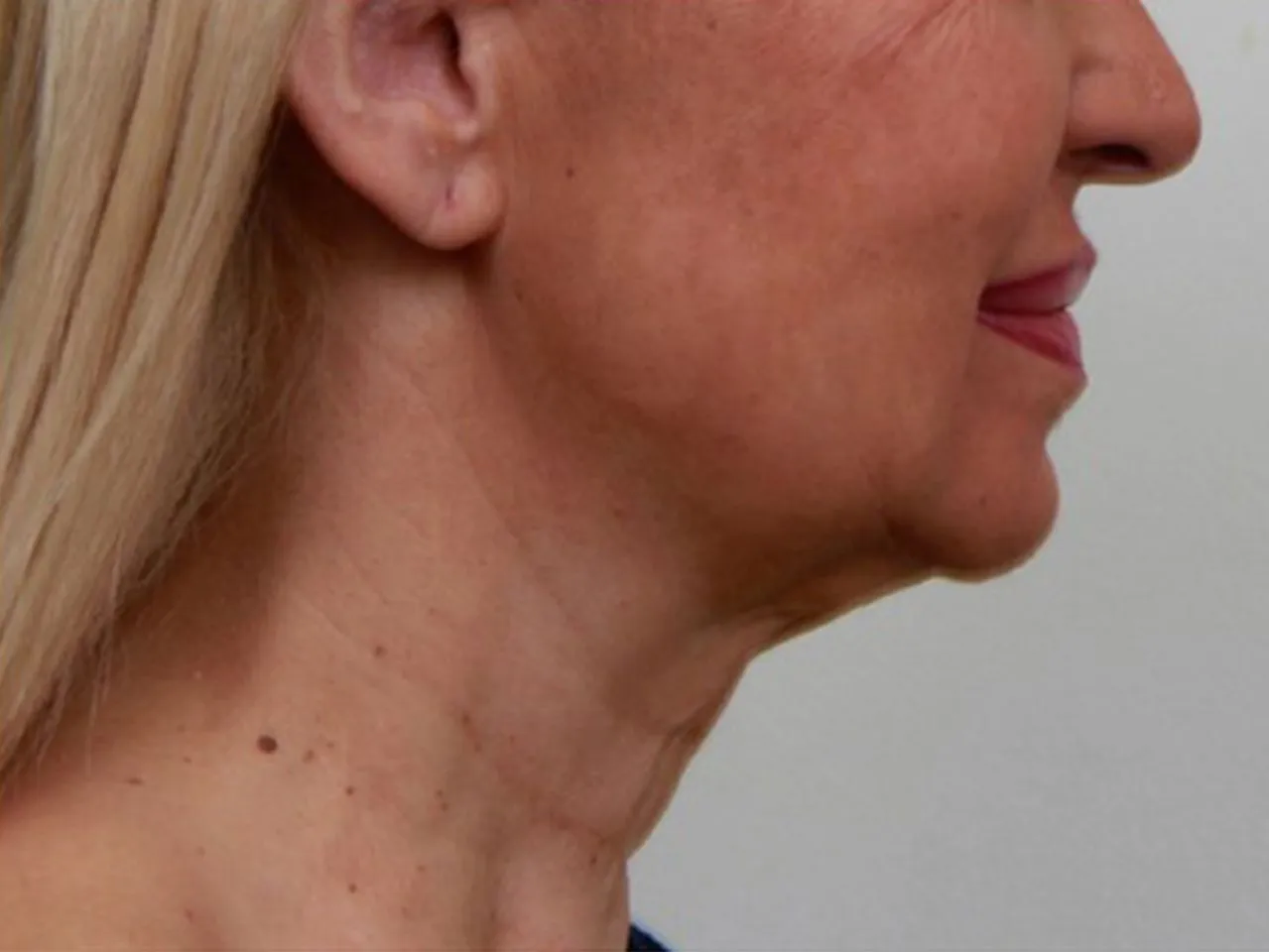
Real case: Patricia, 56, Barcelona
Deep plane facelift. Before and after photos of the surgery.
How much does a mini facelift cost?
As it is not a separate operation, the price is that of the type of facelift you need. At Instituto de Benito, a facelift starts from €12,000 (VAT not included), a neck lift from €7,500 and a brow lift from €4,000. We explain it in detail in how much a facelift costs.
If you are in Barcelona, you can see prices, team and cases on facelift in Barcelona.
Frequently asked questions about the mini facelift
What is a mini facelift and what does it involve?
It is a facelift: the tissues that have dropped are repositioned and the excess skin is removed. It is called «mini» when there is less to treat, because the laxity is mild or limited to one area.
What is the difference between a mini facelift and a facelift?
None in the technique. A mini facelift is a facelift; what changes is how much needs treating, and that depends on each patient's laxity.
How long does the effect of a mini facelift last?
About 10 years, like a facelift. It does not depend on the technique, but on the tissues, genetics and how each person ages. After 5 years a little maintenance is usually advisable.
What do people think of the mini facelift?
Patients value above all a natural look and a shorter recovery when laxity is mild. The best way to get a real idea is to look at patient cases with before and after photos: facelift before and after, and the case of Carmen Borrego.
How many hours does a mini facelift take?
It depends on what needs correcting. With less laxity the operation is shorter; with more, it is longer. Your surgeon tells you after the consultation.
How much does a mini facelift cost?
The price is that of the type of facelift you need: from €12,000 for a facelift, €7,500 for a neck lift and €4,000 for a brow lift (VAT not included).
At what age is it done?
Usually from the age of 40 or 45, when the jawline, neck or chin have lost definition. Laxity matters more than age.